


A hospital group in Dubai just spent eight months building a patient portal — only to discover their app couldn’t connect to NABIDH because the development team hadn’t accounted for HL7 FHIR messaging standards. The rework cost them an additional AED 200,000 and delayed their DHA approval by four months.
This guide breaks down everything you need to know — from DHA licensing and NABIDH integration requirements to cost structures, must-have features, and the HIPAA vs. UAE Health Data Law comparison that trips up even experienced teams. Whether you’re a startup founder scoping your first mHealth app or a hospital CXO evaluating development partners, this is the compliance-first roadmap you’ve been looking for.
Why Dubai Is Becoming a Hub for Healthcare App Development
Market Size and Growth Projections
Dubai’s healthcare app ecosystem is expanding at a pace that few regional markets can match. The numbers tell a compelling story.
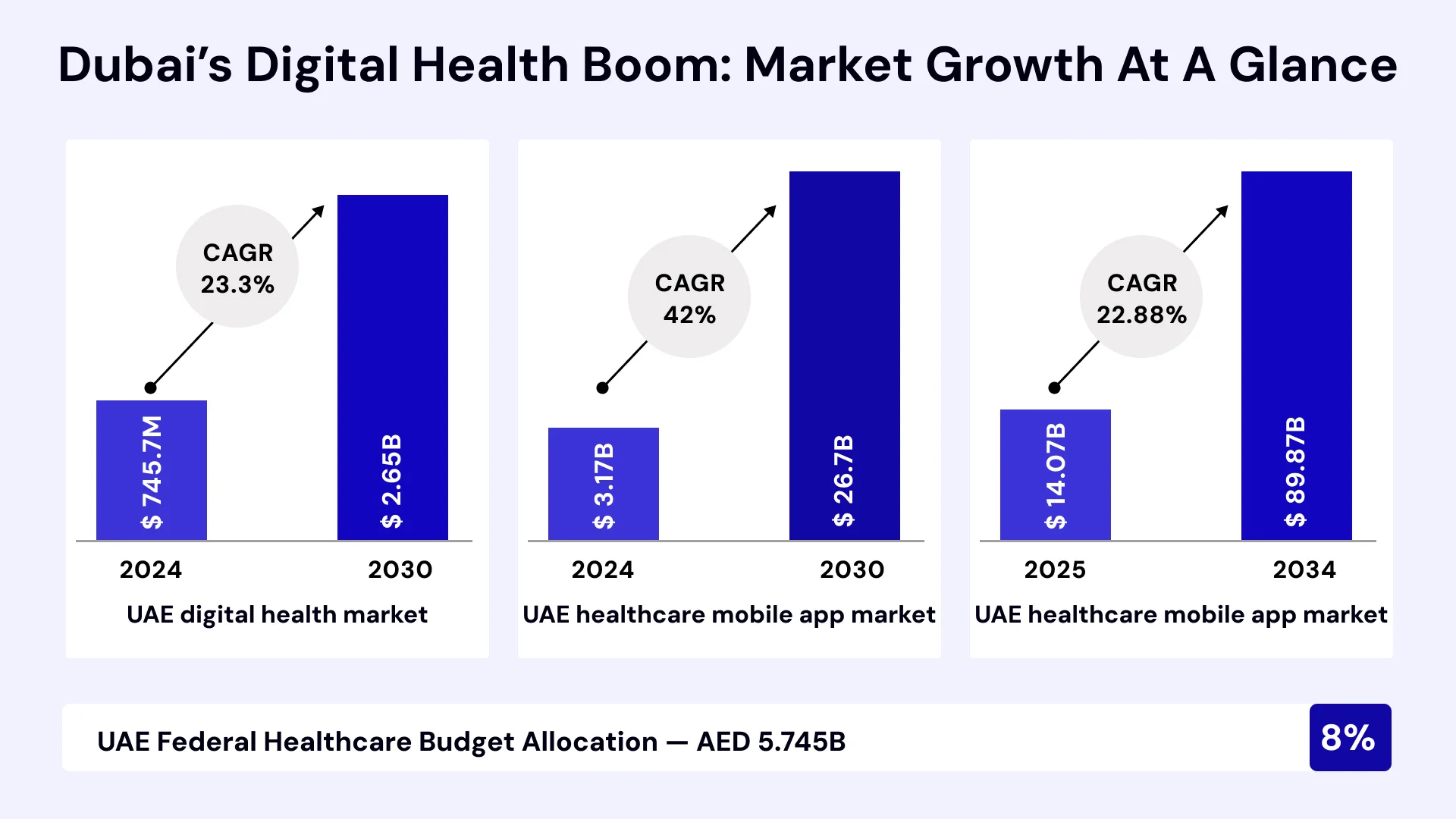
The UAE alone contributed USD 745.7 million in digital health revenue in 2024, with tele-healthcare accounting for the largest share at 58.12%. These aren’t just abstract projections — they reflect real demand from hospitals, clinics, insurers, and patients who are rapidly shifting to digital-first healthcare delivery.
Government-Led Digital Health Transformation
What makes Dubai particularly attractive for healthcare software development isn’t just market demand — it’s the government’s active role in creating the infrastructure for digital health to succeed.
Add to this the UAE’s allocation of AED 5.745 billion (8% of the federal budget) to healthcare for the 2025 fiscal year, and you’ve got a market that’s investing heavily in the ecosystem your app will operate within.
Types of Healthcare Apps Built in Dubai
Before diving into compliance, it helps to understand the categories of healthcare apps that Dubai’s market demands. The app type directly influences which regulations apply, what features you’ll need, and how complex your NABIDH integration will be.
Telemedicine and Virtual Consultation Apps
These are the most in-demand category post-pandemic, with telemedicine adoption stabilizing at 60–70% across the UAE. A compliant telemedicine app in Dubai must include encrypted video consultations, UAE Pass or two-factor authentication for patient identity verification, digital consent capture, and e-prescription workflows that align with DHA’s Standards for Telehealth Services (Version 2).
Patient Management and EHR Apps
Electronic Health Record (EHR) apps serve as the operational backbone for clinics and hospitals. In Dubai, these apps must integrate with NABIDH for real-time data exchange, support ICD-10 coding for diagnoses and SNOMED-CT for clinical terminology and maintain audit logs accessible during DHA inspections.
Remote Patient Monitoring and Wearable-Integrated Apps
RPM apps are gaining traction for chronic disease management — diabetes, hypertension, cardiovascular conditions — which are highly prevalent in the UAE. DHA’s updated standards now include specific protocols for managing data alerts from wearable devices, including escalation procedures for when a digital signal (like an arrhythmia alert from a smartwatch) requires conversion to an in-person emergency admission.
Pharmacy and Medication Management Apps
These apps handle e-prescriptions, medication reminders, and pharmacy delivery logistics. In Dubai, they must connect to DHA’s controlled-drug monitoring systems and comply with MOHAP e-prescription regulations. The controlled substance tracking requirements are particularly stringent and require real-time reporting.
Also Read: Role of Artificial Intelligence in Healthcare Industry
Understanding DHA Compliance for Healthcare Apps
The Dubai Health Authority is the regulatory gatekeeper for every healthcare application operating in the emirate. If you’re building a healthcare app for the Dubai market, DHA compliance isn’t optional — it’s your market entry ticket.
What Is the DHA Licensing Framework?
DHA regulates healthcare facilities, professionals, and digital health solutions through a centralized licensing system managed via the Sheryan Portal. For digital health apps, the licensing framework requires that all medical data be stored on UAE-based servers (or on a Cloud Service Provider certified by the Dubai Electronic Security Centre — DESC). The framework also mandates encryption, multi-factor authentication, and comprehensive audit logging across all app systems.
A key distinction: HIPAA compliance alone does not satisfy DHA requirements. A platform that is HIPAA compliant but hosts data on servers outside the UAE is considered non-compliant under Dubai’s data localization rules.
DHA Approval Process for Digital Health Apps
The DHA app approval process typically takes 4–8 weeks and follows a structured path. Here’s what the timeline looks like in practice:
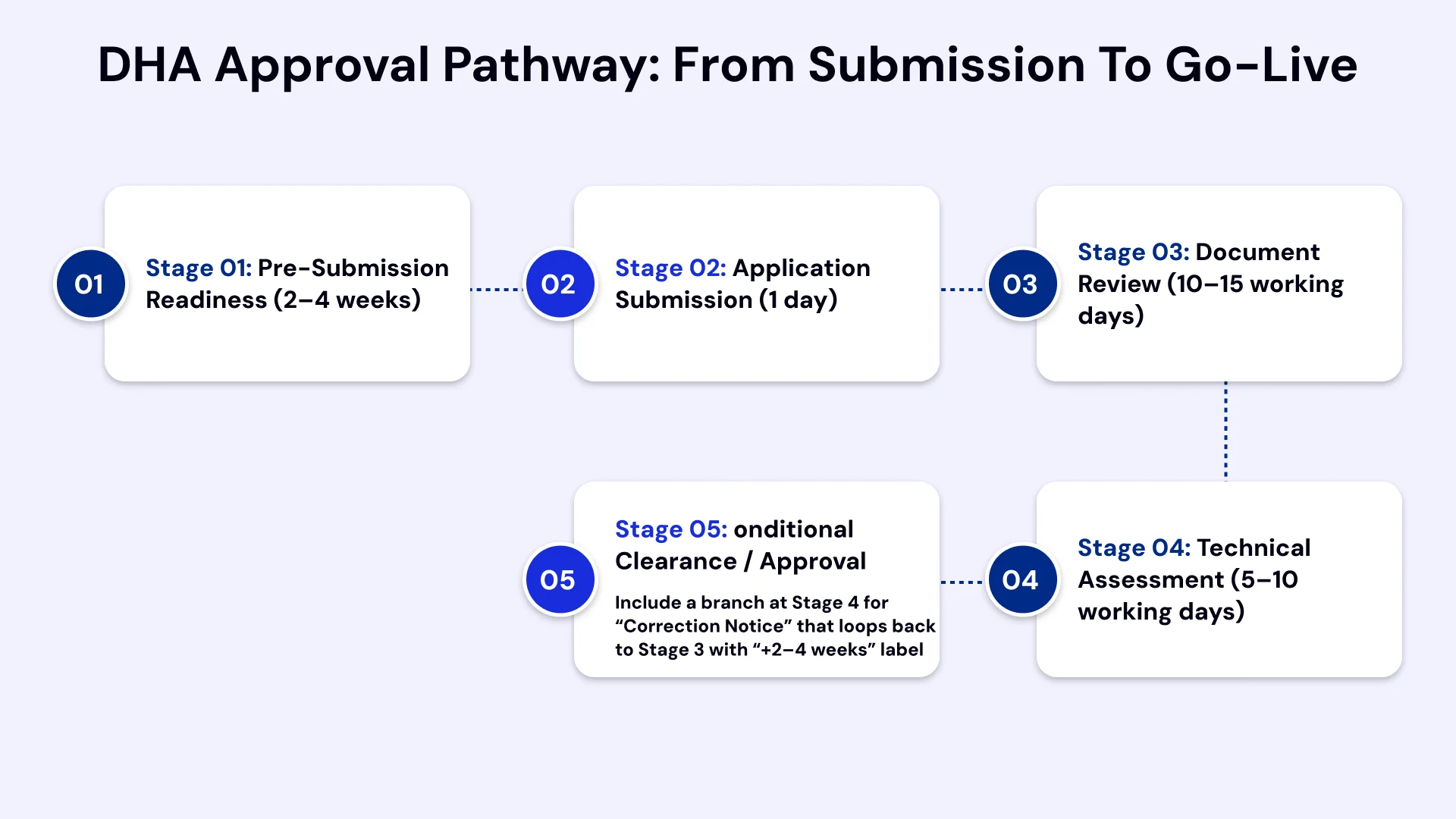
| Stage | Timeline | Key Actions |
| Pre-Submission Readiness | 2–4 weeks | Ensure NABIDH integration, data localization, encryption protocols |
| Application Submission | 1 day | Submit via DHA portal with all compliance documentation |
| Document Review | 10–15 working days | DHA verifies uploaded files, cross-checks compliance standards |
| Technical Assessment | 5–10 working days | Security audit, NABIDH connectivity test, penetration testing review |
| Conditional Clearance | 1–5 working days | Correction notice if issues found; approval if standards met |
If issues are found during the technical assessment, DHA issues a correction notice. Addressing these corrections and resubmitting can add 2–4 additional weeks to the timeline — which is why building compliance into the development process from day one is critical.
DHA’s Regulatory Sandbox — A Strategic Advantage
One of the most underutilized tools for healthcare app developers in Dubai is DHA’s regulatory sandbox. This controlled environment lets you test your digital health innovation with real users under regulatory supervision, without needing full licensing upfront. It’s particularly valuable for startups building AI-based diagnostics, remote monitoring tools, or novel telemedicine models that don’t fit neatly into existing regulatory categories.
Dubai residents are early technology adopters, making the sandbox an ideal testing ground for validating product-market fit and compliance simultaneously.
NABIDH Compliance - What Every App Developer Must Know
What Is NABIDH and Why It Matters
NABIDH compliance is mandatory for all DHA-licensed healthcare providers and their technology systems. The platform currently manages over 9.5 million patient records across 1,500+ facilities, creating a unified health data ecosystem that every healthcare app in Dubai must plug into.
For app developers, this means your EMR, telemedicine platform, or patient portal isn’t a standalone product — it’s a node in Dubai’s health information network. If your system can’t exchange data with NABIDH, it can’t operate in the market.
Key NABIDH Technical Requirements
NABIDH’s technical requirements are specific and non-negotiable. Here’s what your development team must account for:
| Requirement | Standard | What It Means for Your App |
| Messaging Protocol | HL7 FHIR (primary), HL7 V2 via MLLP | Your app must send and receive health data using FHIR-based REST APIs or HL7 V2 messaging |
| Diagnosis Coding | ICD-10 | All diagnostic data must use ICD-10 classification codes |
| Clinical Terminology | SNOMED-CT | Clinical terms in your app must map to SNOMED-CT standards |
| Data Encryption | End-to-end Encryption | All data transactions to and from NABIDH must be encrypted in transit and at rest |
| Access Control | Role-based (RBAC) | Only authorized healthcare professionals can access patient data, verified through authentication |
| Data Storage | UAE-based servers or DESC-certified CSP | All health data must reside within the UAE or on approved cloud infrastructure |
| Claims Integration | eClaimLink | Billing and claims data must flow through DHA’s eClaimLink system |
NABIDH Integration Steps for Healthcare Apps
The integration process follows a defined sequence that your development partner should be deeply familiar with:
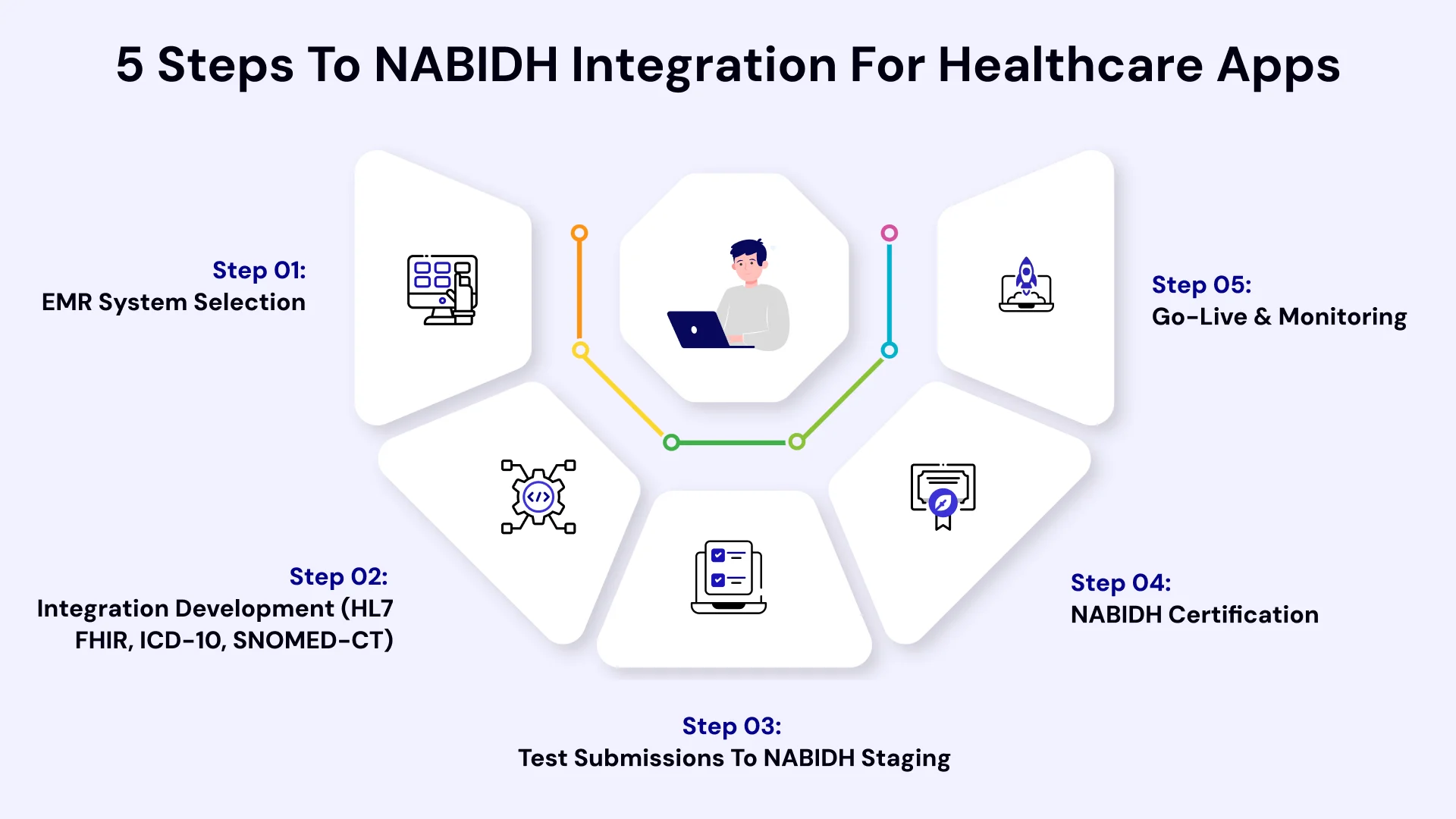
Step 1: EMR System Selection. Choose an EMR from the NABIDH-approved vendor list, or ensure your custom-built system meets all NABIDH technical specifications.
Step 2: Integration Development. Build the HL7 FHIR/V2 connectors, configure ICD-10 and SNOMED-CT mapping, and implement the required encryption and access control layers.
Step 3: Test Submissions. Submit test data to NABIDH’s staging environment. DHA validates data format, coding accuracy, and transmission security.
Step 4: Certification. Once test submissions pass, DHA issues NABIDH certification confirming your system is approved for production data exchange.
Step 5: Go-Live and Monitoring. Deploy to production with real-time monitoring. DHA conducts periodic audits post-launch to verify continued compliance.
NABIDH V2 (2025) — What Changed
In April 2025, DHA issued Version 2 of the Standards for Interoperability and Data Exchange (effective July 2025), introducing several significant updates. The new version prioritizes FHIR-based APIs as the primary integration standard (previously HL7 V2 was the dominant protocol), expands data exchange requirements to cover patient portals and remote patient monitoring systems (not just EMRs), and introduces stricter data validation rules that reduce submission errors.
If your existing healthcare app was built on HL7 V2 alone, you’ll need to add FHIR capabilities to remain compliant under the updated standards. This is a non-trivial upgrade that requires architectural planning.
HIPAA vs. UAE Health Data Law - What Actually Applies in Dubai?
This is where most international development teams get confused. Let’s clear it up.
Where HIPAA Applies (and Where It Doesn’t)
HIPAA is a US federal law. It applies to covered entities and business associates that handle protected health information (PHI) subject to US jurisdiction. If your Dubai-based healthcare app serves US patients, partners with US healthcare institutions, or processes health data governed by HIPAA, you’ll need to comply with HIPAA requirements alongside UAE regulations.
But here’s the critical point: HIPAA compliance alone does not equal DHA compliance. A platform that meets every HIPAA requirement but stores patient data on servers in North America is non-compliant in Dubai.
Key Differences: Data Retention, Localization, and Consent
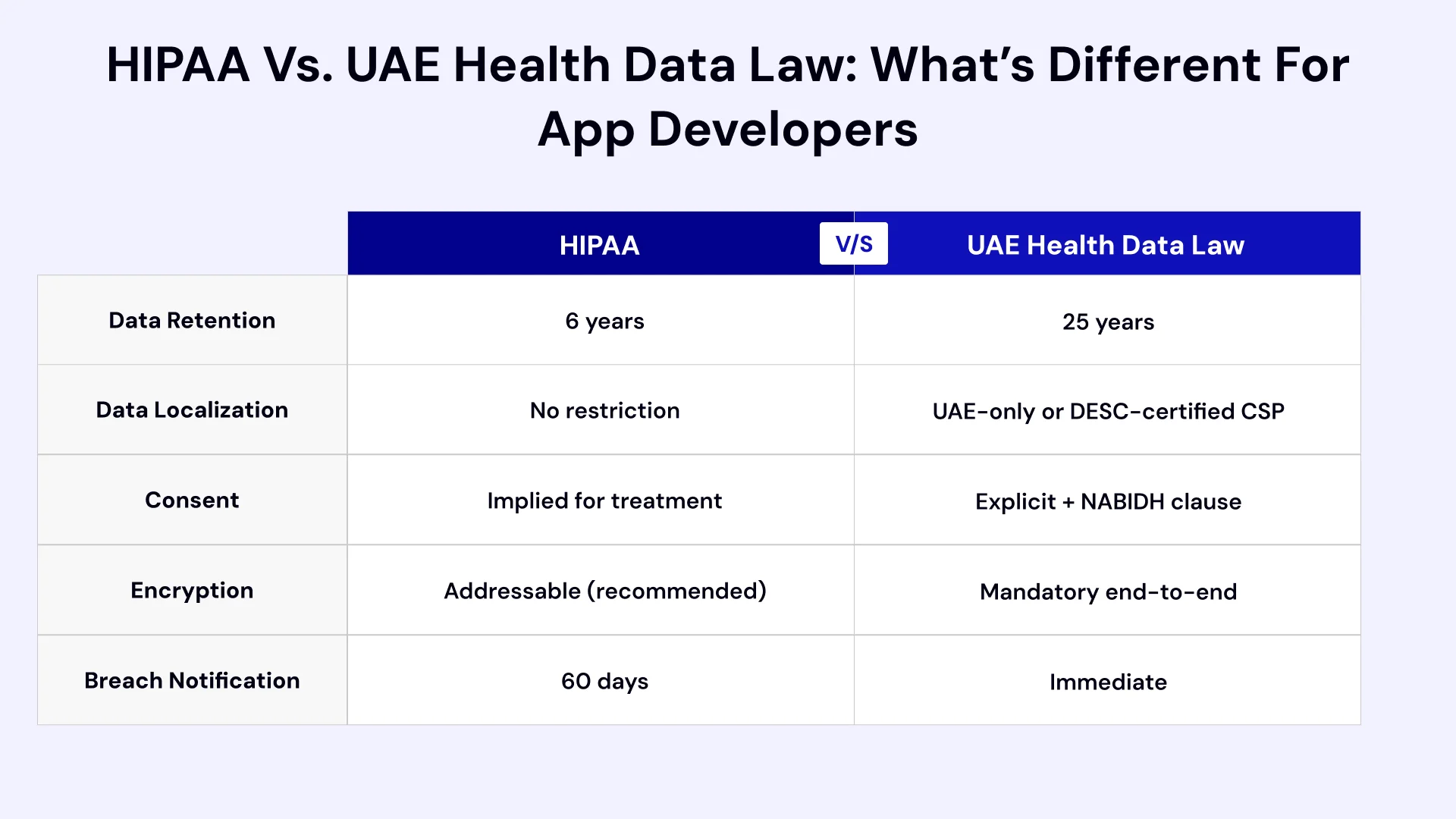
| Parameter | HIPAA (USA) | UAE Health Data Law |
| Data Retention Period | 6 years after last procedure | 25 years after last procedure |
| Data Localization | No geographic restriction | Health data must stay in UAE (or DESC-certified CSP) |
| Consent Model | Implied for treatment, payment, operations | Explicit consent required; clause for NABIDH data sharing mandatory |
| Enforcement Body | HHS Office for Civil Rights | MOHAP, DHA, and emirate-level regulators |
| Breach Notification | Within 60 days | Immediate reporting obligations under UAE PDPL |
| Encryption Standard | "Addressable" (recommended) | Mandatory end-to-end encryption |
The 25-year data retention requirement alone has significant implications for your app’s infrastructure, storage costs, and data lifecycle management strategy.
Building for Dual Compliance (International Patient Base)
If your app serves both local UAE patients and international patients (common in Dubai’s medical tourism ecosystem, which attracted 691,478 medical tourists in 2023), you’ll need a dual-compliance architecture. This typically involves UAE-hosted primary data storage with encrypted cross-border data transfer protocols for US-regulated data, separate consent management workflows for HIPAA and UAE PDPL, and audit systems that satisfy both HHS and DHA inspection requirements.
This adds complexity and cost, but it’s unavoidable for apps operating at the intersection of Dubai’s healthcare market and international patient services.
Also Read: Digital Transformation in the Healthcare Industry
Must-Have Features for a Healthcare App in Dubai
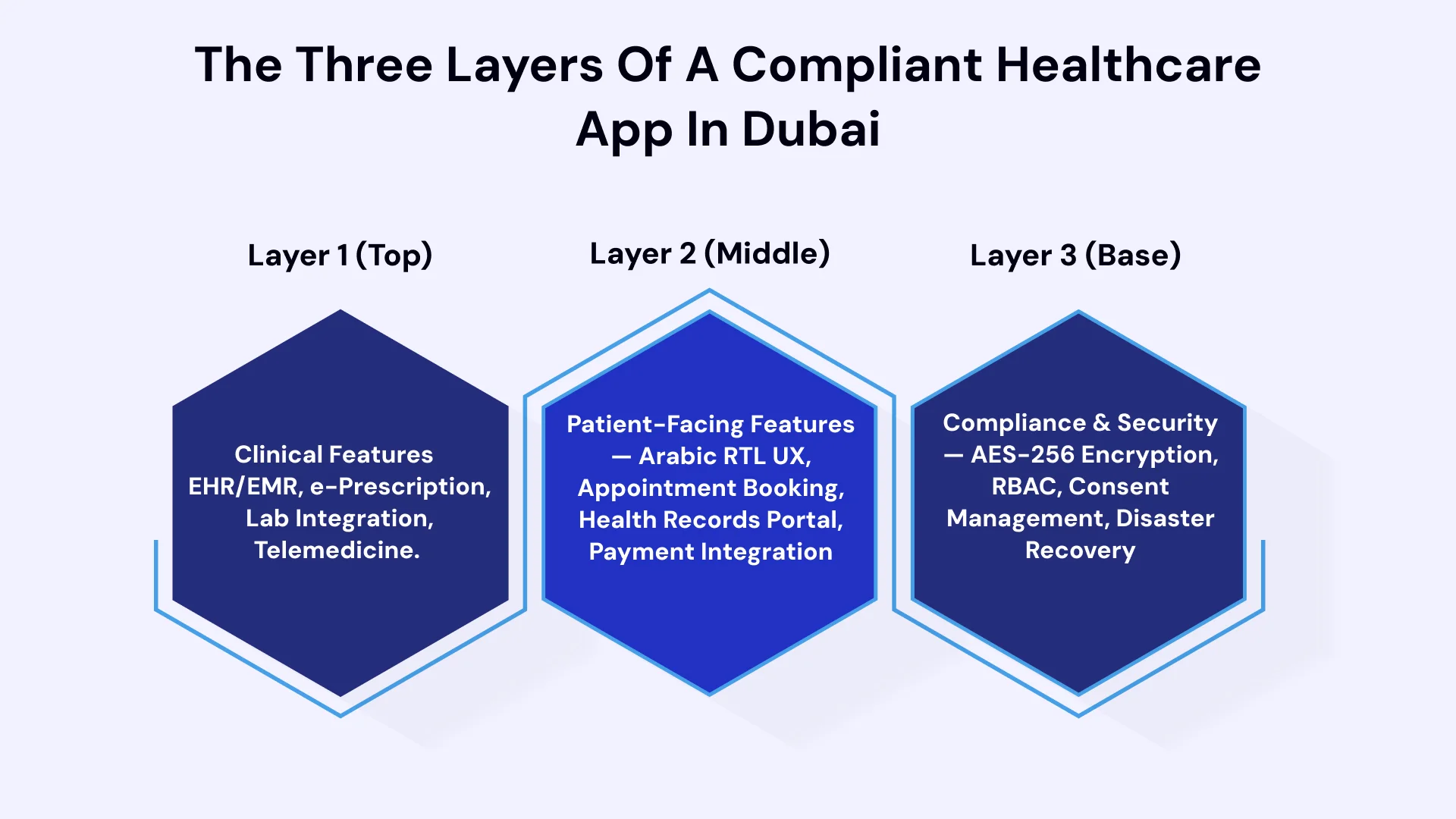
Feature planning for a Dubai healthcare app must balance clinical functionality, patient experience, and regulatory compliance. Here’s a breakdown across three critical layers.
Clinical Features
EHR/EMR Integration: NABIDH-compliant electronic health records with ICD-10 and SNOMED-CT mapping, real-time data exchange, and audit logging.
e-Prescription: Digital prescription workflows connected to DHA’s controlled-drug monitoring systems and MOHAP e-prescription regulations.
Lab and Diagnostic Integration: Secure interfaces with laboratory information systems (LIS) for test ordering, result delivery, and abnormal result flagging.
Telemedicine Module: Encrypted video consultations with UAE Pass authentication, digital consent, and automated visit documentation.
Patient-Facing Features
Arabic-First UX with RTL Support: This isn’t a nice-to-have in Dubai — it’s a market requirement. Your app must support right-to-left (RTL) interfaces, Arabic-language content, and culturally appropriate design patterns.
Appointment Booking and Reminders: Online scheduling integrated with the facility’s practice management system, with SMS/push notification reminders.
Health Records Access: Patient-facing portal for viewing lab results, visit summaries, and medication history — all pulled from the NABIDH-integrated backend.
Payment Integration: Local payment gateway support (Apple Pay, Samsung Pay, and UAE-specific payment methods) with insurance claim processing via eClaimLink.
Compliance and Security Features
End-to-End Encryption: AES-256 for data at rest, TLS 1.3 for data in transit — mandatory under both DHA standards and HIPAA.
Role-Based Access Control (RBAC): Granular permissions ensuring only authorized personnel access patient data, with full audit trails.
Consent Management: Digital consent capture that satisfies both UAE PDPL requirements and DHA’s specific NABIDH data-sharing consent clause.
Disaster Recovery and Backup: Automated backup systems with UAE-based redundancy, aligned with DHA’s business continuity requirements.
Also Read: Top Healthcare Business Ideas for Startups in 2025
How Much Does Healthcare App Development Cost in Dubai?
App Development cost is the first question every CXO and startup founder asks. The honest answer: it depends on complexity, compliance scope, and team model. But here’s a realistic breakdown based on current Dubai market rates.
Cost by App Complexity
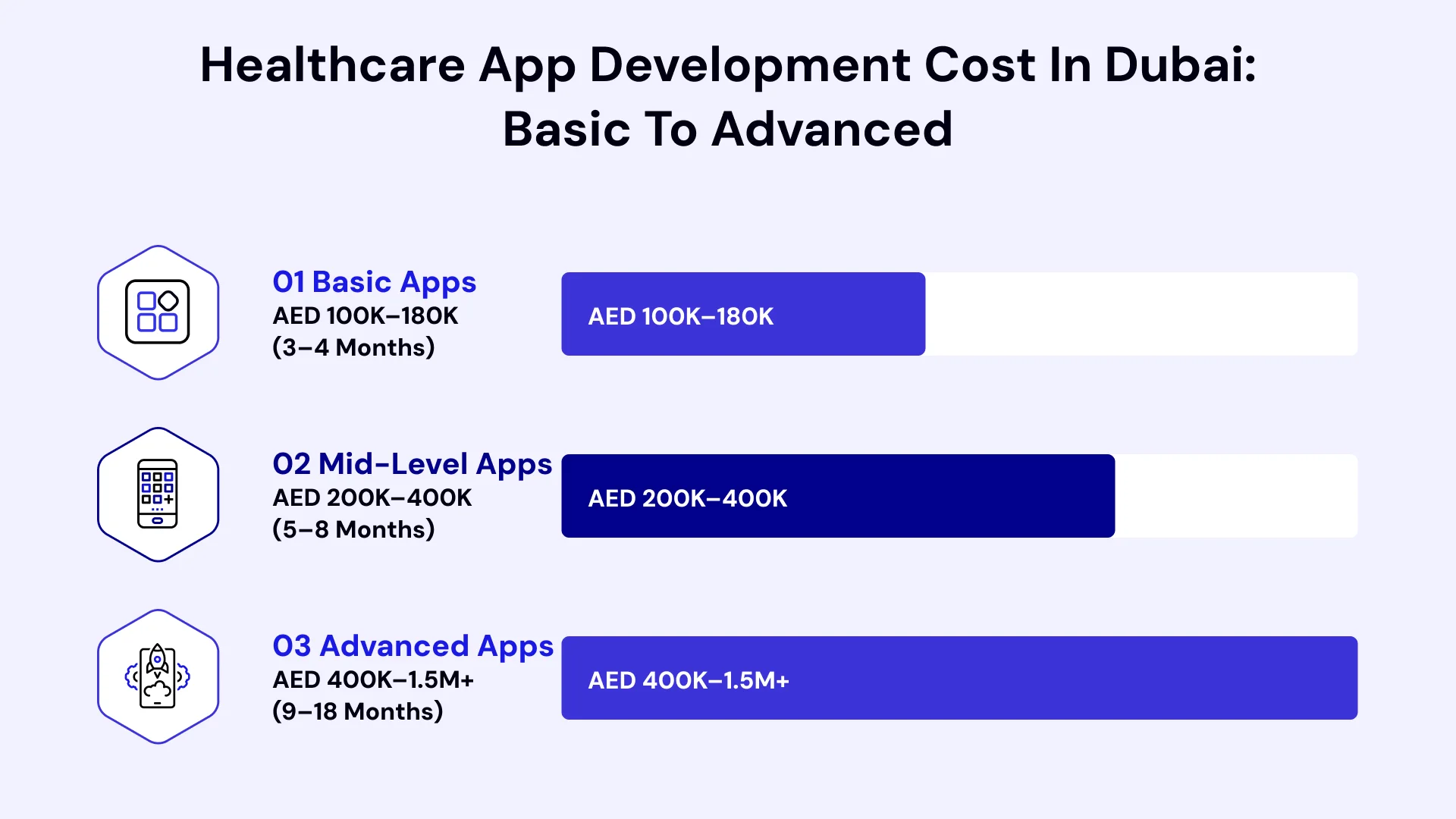
| App Complexity | Features | Estimated Cost (AED) | Timeline |
| Basic | Appointment booking, patient profiles, basic reminders | 100,000 – 180,000 | 3–4 months |
| Mid-Level | Telemedicine, EHR integration, e-prescription, NABIDH connectivity | 200,000 – 400,000 | 5–8 months |
| Advanced | AI diagnostics, RPM with wearable integration, multi-facility deployment, full DHA + HIPAA compliance | 400,000 – 1,500,000+ | 9–18 months |
Compliance Cost Impact
Here’s what many cost estimates miss: DHA and NABIDH compliance adds 20–40% to your base development cost. That includes NABIDH integration development and testing (AED 30,000–80,000+), security infrastructure for UAE data localization, DHA submission documentation and revision cycles, and penetration testing and security audits required for approval.
Skipping compliance planning upfront doesn’t save money — it shifts the cost to rework. The hospital example from our introduction? That AED 200,000 rework bill was entirely avoidable with proper compliance mapping at the discovery stage.
Local vs. Offshore vs. Hybrid Development Teams
Your team model significantly impacts both cost and compliance quality.
| Team Model | Hourly Rate | Compliance Familiarity | Best For |
| Local (Dubai-based) | AED 150–330/hr ($40–$90) | High — direct DHA/NABIDH experience | Complex, compliance-heavy projects |
| Offshore | AED 75–185/hr ($20–$50) | Low to moderate | Non-regulated features, UI/UX |
| Hybrid | AED 110–260/hr ($30–$70) | High for compliance; cost-efficient for general dev | Most healthcare app projects |
The hybrid model — with a local compliance-experienced team leading architecture and DHA interactions, supported by an offshore team for general development — delivers the best balance of cost and compliance quality for most healthcare app projects in Dubai.
Step-by-Step Healthcare App Development Process in Dubai
Here’s the development lifecycle that accounts for Dubai’s unique regulatory requirements at every stage.
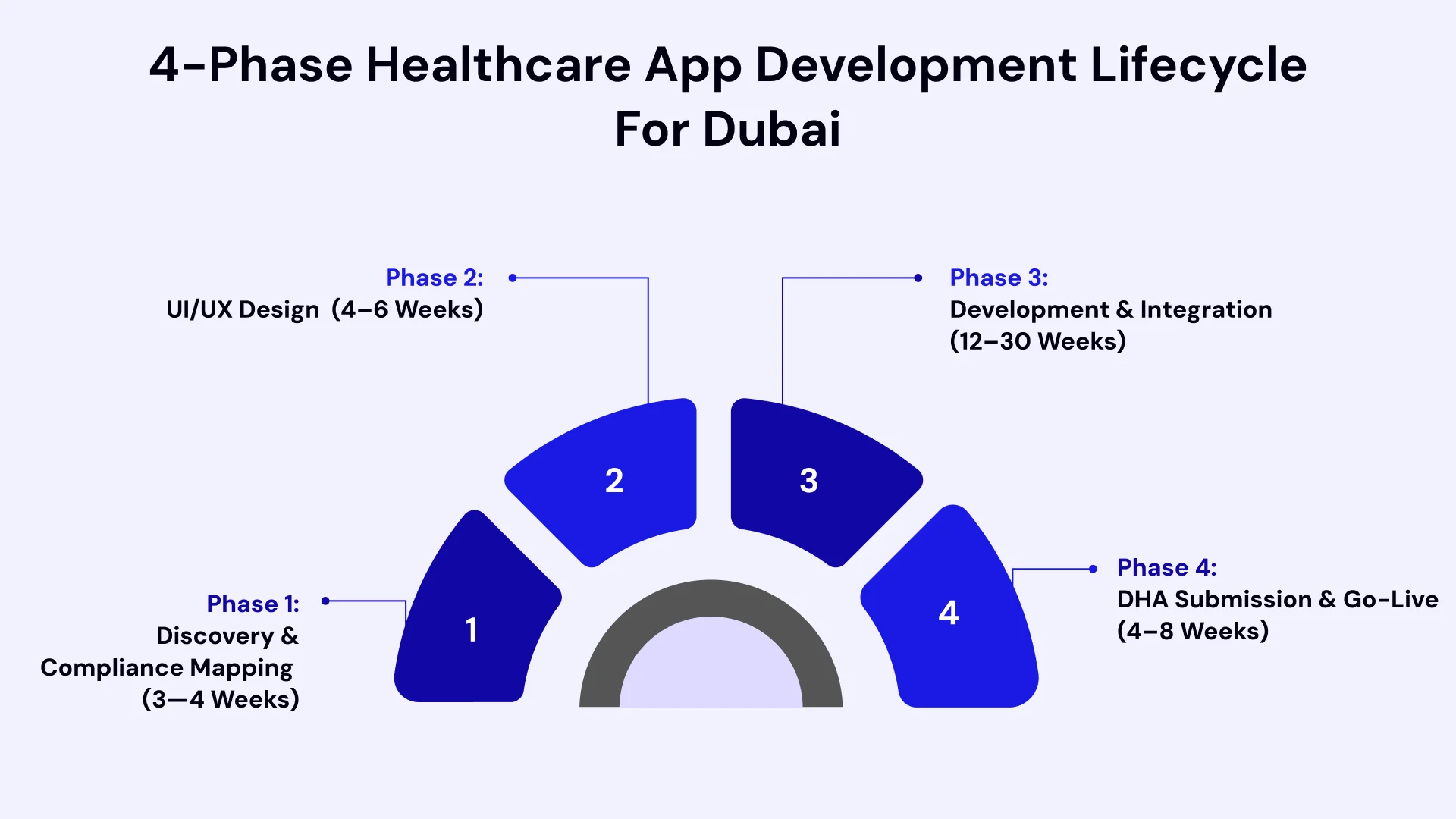
Phase 1: Discovery and Compliance Mapping
This is where most successful projects differentiate themselves. During discovery, your team should map all applicable regulations (DHA, NABIDH, PDPL, and HIPAA if serving international patients), define data architecture for UAE localization requirements, identify the NABIDH-approved EMR vendor or custom integration path, and plan for the 25-year data retention requirement in your infrastructure design.
Phase 2: UI/UX Design with RTL and Arabic-First Approach
Design for Dubai means designing for a multilingual, multicultural user base. Your app needs right-to-left (RTL) layout as a first-class feature (not an afterthought), Arabic and English content with seamless language switching, culturally appropriate iconography and color palettes, and accessibility standards aligned with DHA’s patient-centric care mandates.
Phase 3: Development, NABIDH Integration, and QA
Development should proceed in parallel tracks: core app features, NABIDH integration, and compliance infrastructure. Key development milestones include HL7 FHIR API development and NABIDH staging environment testing, ICD-10 and SNOMED-CT data mapping validation, encryption implementation (AES-256 at rest, TLS 1.3 in transit), role-based access control configuration and audit logging, and eClaimLink integration for billing workflows.
QA must include both functional testing and compliance testing — simulating DHA inspection scenarios before actual submission.
Phase 4: DHA Submission and Go-Live
Once development and internal QA are complete, submit your application through DHA’s portal. Keep in mind that the 4–8-week approval window assumes a clean submission. Prepare all compliance documentation (data flow diagrams, encryption certificates, NABIDH certification, penetration test reports) upfront to minimize revision cycles. Post-approval, deploy to production and set up continuous monitoring for NABIDH data exchange health and DHA audit readiness.
How to Choose a Healthcare App Development Company in Dubai
Selecting the right development partner can make or break your healthcare app’s success in Dubai. Here’s what to evaluate beyond the standard pitch deck.
Compliance Experience (DHA, NABIDH, HIPAA)
Ask to see proof of DHA-approved apps in their portfolio. Any company can claim compliance expertise — but have they actually navigated the NABIDH certification process? Do they understand the difference between HIPAA and UAE Health Data Law requirements? Can they show you a completed DHA submission package? These questions separate genuine healthcare app development expertise from general mobile development.
Regional Portfolio and Case Studies
Look for case studies specific to Dubai’s healthcare ecosystem. A company that has built enterprise apps for global markets may still struggle with Arabic RTL design, UAE data localization architecture, or DHA’s specific inspection requirements. Regional experience matters.
Post-Launch Support and Maintenance
Healthcare apps require continuous compliance maintenance. DHA standards evolve (as the NABIDH V2 update demonstrates), security patches must be deployed promptly, and data exchange health must be monitored constantly. Ensure your partner offers ongoing support that covers compliance updates, not just bug fixes.
Also Read: Transforming Healthcare with ERP Systems
Conclusion
Dubai’s healthcare app market is one of the fastest-growing in the world — but growth alone doesn’t guarantee success. The apps that thrive are the ones built with DHA compliance, NABIDH integration, and UAE data protection requirements embedded into their architecture from day one, not retrofitted after development.
Whether you’re building a telemedicine platform, an EHR system, a remote monitoring solution, or a pharmacy management app, the regulatory landscape is clear: comply first, build second. The DHA’s regulatory sandbox, the NABIDH V2 FHIR standards, and the UAE Health Data Law’s 25-year retention requirements are not obstacles — they’re the framework within which successful healthcare apps operate.
VLink is a healthcare app development company in Dubaiwith proven experience navigating DHA licensing, NABIDH certification, and dual-compliance architectures for clients across the UAE. From compliance mapping to post-launch monitoring, our team builds healthcare apps that don’t just work — they pass inspection.
Ready to build your healthcare app the right way? Contact VLink’s Dubai team for a free compliance assessment and cost estimate.

Vice President & Global Head of Digital, VLink Inc.
Amitabh is the Vice President and Global Head of Digital at VLink Inc., with over 20 years of leadership experience in IT strategy, digital transformation, and emerging technologies.

 Shivisha Patel