


The real estate industry is experiencing a seismic shift powered by artificial intelligence. Property buyers no longer wait days for agent responses or sift through hundreds of irrelevant listings. Instead, they expect instant, personalized property recommendations at their fingertips—24/7. This transformation is driving forward-thinking retail real estate companies to invest heavily in property search AI chatbots that deliver exceptional customer experiences while dramatically reducing operational costs.
This isn't just a trend—it's a fundamental reimagining of how properties are discovered, evaluated, and purchased. For retail real estate leaders managing extensive property portfolios across multiple locations, the question is no longer whether to implement an AI-powered property search chatbot, but how to build one that drives measurable business outcomes.
This comprehensive guide provides the complete blueprint for developing a property search AI chatbot that transforms your retail real estate operations. Whether you're managing commercial retail spaces, mixed-use developments, or retail-attached residential properties, you'll discover the strategic framework, technical architecture, and implementation roadmap to deploy an AI chatbot that generates high-quality leads and delivers exceptional ROI.

Understanding Property Search AI Chatbots: Beyond Basic Automation
A property search chatbot represents far more than a simple question-and-answer interface. It's an intelligent virtual assistant powered by natural language processing (NLP), machine learning algorithms, and conversational AI that understands user intent, learns from interactions, and delivers increasingly accurate property recommendations over time.
What Sets AI-Powered Property Chatbots Apart
Traditional chatbots follow rigid, rule-based decision trees that frustrate users with limited responses. In contrast, smart property search chatbots leverage advanced technologies to create genuinely helpful experiences:
- Natural Language Understanding: These systems comprehend user queries expressed in everyday language, whether someone asks "show me affordable retail spaces near downtown" or "I need a storefront with high foot traffic under $5,000 monthly."
- Contextual Awareness: AI chatbots maintain conversation context, remembering previous interactions and user preferences throughout the dialogue. This enables more natural, flowing conversations that feel less robotic and more consultative.
- Predictive Recommendations: By analyzing user behavior patterns, search history, and engagement metrics, AI chatbots for property recommendations predict what properties might interest users before they explicitly request them, creating delightful discovery experiences.
- Multi-Channel Integration: Modern property search AI chatbots operate seamlessly across websites, mobile apps, social media platforms, and messaging services, meeting customers wherever they prefer to engage.
The Strategic Business Case for Property Search AI Chatbots in Retail
Before diving into technical implementation, retail industry leaders must understand the compelling business drivers making chatbots for property search essential investments rather than optional enhancements.
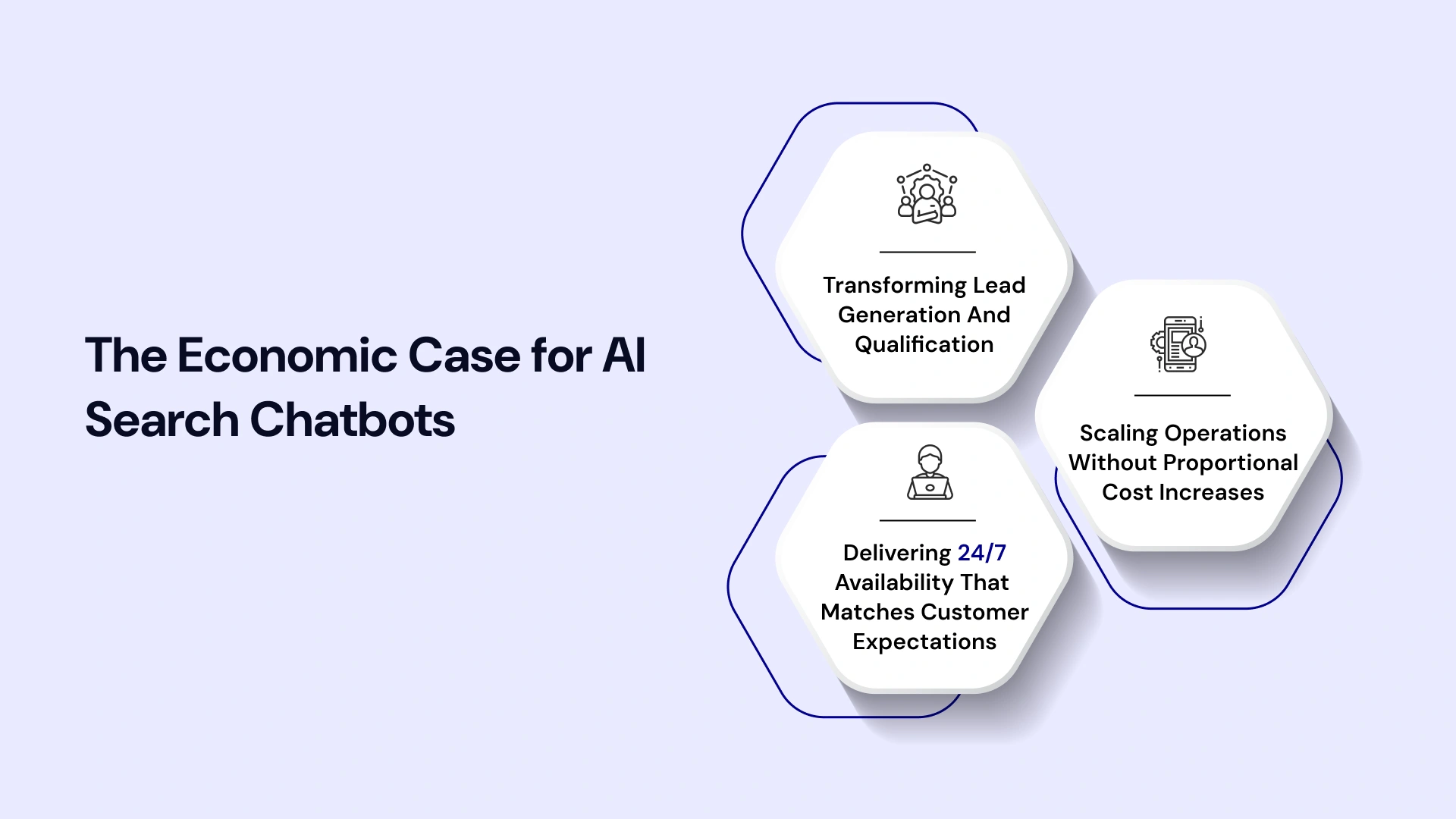
Transforming Lead Generation and Qualification
Property search AI chatbots revolutionize how retail real estate companies capture and qualify leads. Instead of losing potential tenants to slow response times or overwhelming them with generic property lists, AI chatbots engage visitors instantly with personalized conversations that identify serious prospects.
These intelligent systems ask qualifying questions naturally within conversations, gathering critical information about budget ranges, desired locations, space requirements, timeline considerations, and specific amenities. This automated qualification process ensures your sales team receives warm, ready-to-convert leads rather than wasting time on unqualified inquiries through an effective chatbot for lead qualification.
Research shows that AI-powered property search assistants can handle up to 80% of routine customer inquiries, freeing your leasing agents to focus exclusively on high-value activities such as property tours, negotiations, and relationship-building with qualified prospects. The benefits of property search chatbot implementations include significant improvements in response time.
Delivering 24/7 Availability That Matches Customer Expectations
Today's property seekers research options at all hours—during lunch breaks, evenings, and weekends when traditional offices are closed. A chatbot for site visit scheduling eliminates the frustration of unanswered inquiries by providing instant, accurate responses regardless of time zones or business hours.
This always-on availability is particularly crucial for retail real estate companies operating across multiple markets. Your omnichannel property chatbot serves customers in New York at 9 AM while simultaneously assisting prospects in Los Angeles at 6 AM and Chicago at 8 AM, creating a seamless national or international presence.
Scaling Operations Without Proportional Cost Increases
Traditional customer service models require hiring additional staff to handle increased inquiry volumes. Property search AI chatbots break this linear relationship between volume and cost. A well-designed mall directory chatbot or chatbot for warehouse or showroom search handles thousands of simultaneous conversations with the same efficiency it manages ten, allowing your retail real estate business to scale dramatically without proportional increases in staffing costs.
This scalability is especially valuable during high-demand periods, such as seasonal leasing cycles or new development launches. By leveraging expert AI development services, firms can ensure their platforms handle inquiry spikes seamlessly, providing a clear ROI that justifies the strategic investment.
Essential Features of High-Performing Property Search AI Chatbots
Building an effective property search AI chatbot requires careful attention to features that directly impact user experience and business outcomes.
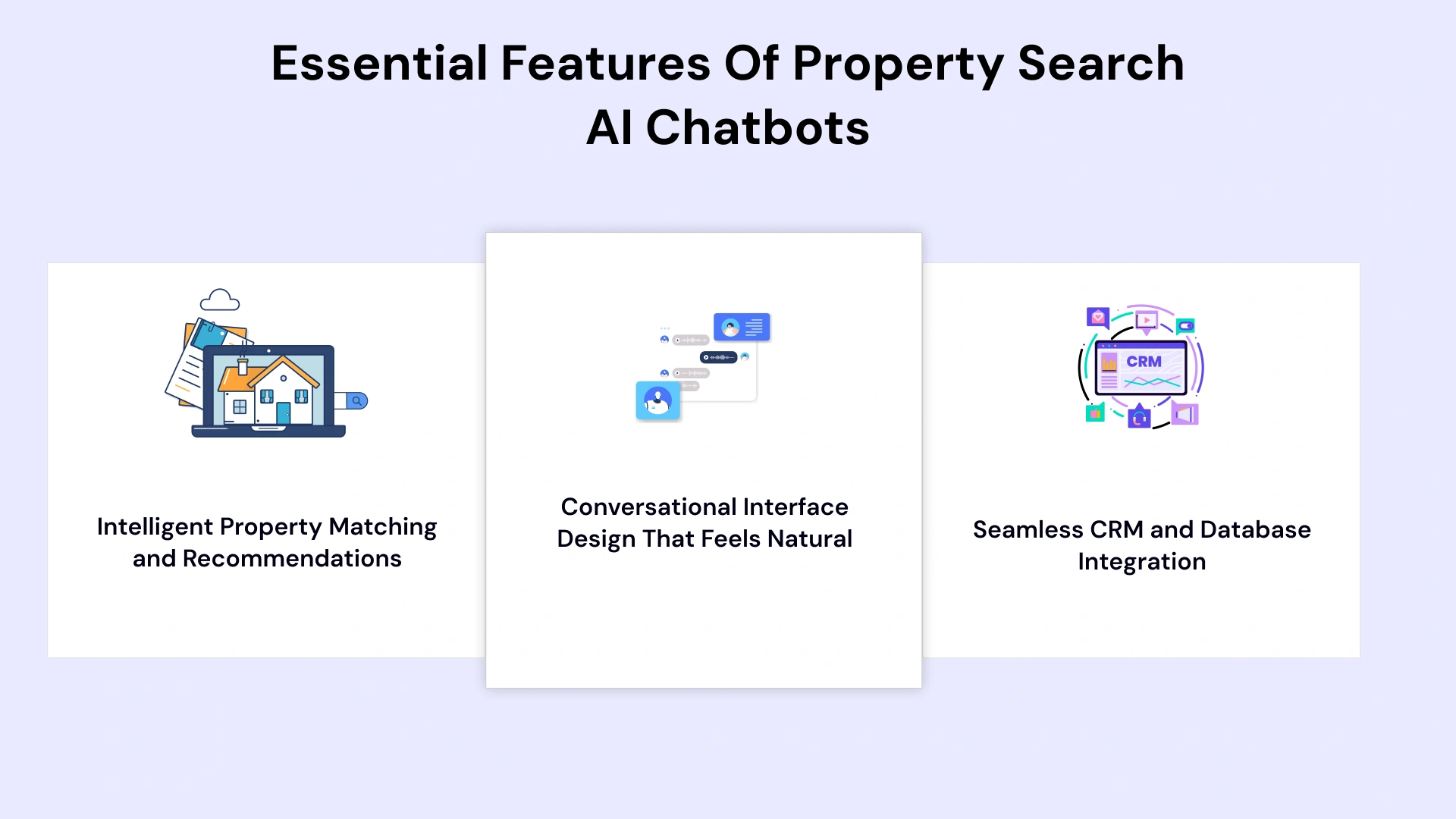
Intelligent Property Matching and Recommendations
The core value proposition of a chatbot for property inquiry automation lies in its ability to quickly and accurately match users with relevant properties. This requires sophisticated algorithms that consider multiple variables simultaneously:
- Multi-Criteria Filtering: Your chatbot must process complex queries involving location preferences, price ranges, square-footage requirements, amenities, lease terms, zoning classifications, and more—all while maintaining conversational flow and providing location-based search capabilities.
- Semantic Search Capabilities: Beyond keyword matching, AI-powered semantic search understands the intent behind queries. When someone asks for "a retail space perfect for a boutique coffee shop," the system recognizes that this implies specific characteristics, such as customer seating areas, appropriate plumbing, and foot traffic patterns.
- Visual Property Presentations: Integrate rich media capabilities through a chatbot with virtual tour integration and a floor-plan display that allows your chatbot to show property photos, video tours, floor plans, and virtual walkthroughs directly within the conversation interface, creating immersive exploration experiences.
Conversational Interface Design That Feels Natural
The difference between chatbots that users abandon and those they engage with comes down to conversation quality. Your conversational AI development services for location discovery must feel like interacting with a knowledgeable, helpful colleague rather than interrogating a database.
- Personality and Brand Voice: Infuse your chatbot with personality that reflects your brand identity. Whether professional and sophisticated or friendly and approachable, a consistent voice creates memorable interactions.
- Context Preservation: Implement memory functions that recall previous conversations with returning users, eliminating repetitive questions and demonstrating that you value their time through intelligent integration of listing data.
- Graceful Error Handling: When your chatbot encounters queries it cannot fully address, it should acknowledge its limitations transparently by following proper chatbot escalation protocols to a human agent, offering alternative paths forward, such as connecting users with a human agent or suggesting related resources.
Seamless CRM and Database Integration
A chatbot integration with a CRM system cannot operate in isolation. It must integrate deeply with your existing technology ecosystem to deliver value:
- Real-Time Inventory Synchronization: Connect your chatbot directly to property management systems via chatbot integration with property data feeds, ensuring users receive current availability information via chat for availability checks and preventing frustration when viewing already-leased properties.
- CRM Data Enrichment: Automatically capture conversation data and user preferences in your CRM system, creating rich prospect profiles that sales teams leverage for personalized follow-up.
- Lead Scoring and Routing: Implement intelligent algorithms that score leads based on engagement levels, qualification criteria, and buying signals, then route high-priority prospects to appropriate team members automatically through effective chatbot performance monitoring.
The Technical Architecture of Property Search AI Chatbots
Understanding the technical foundation supporting property search chatbot vendors and platforms helps retail real estate leaders make informed decisions about development approaches and vendor selection when evaluating AI chatbot platforms for property search.
Natural Language Processing (NLP) Engines
NLP serves as the brain of your NLP chatbot for property search, enabling it to understand human language in all its complexity. Leading NLP platforms like Google's Dialogflow, Microsoft's LUIS, IBM Watson Assistant, and Amazon Lex provide the foundation for parsing user input, identifying intents, and extracting relevant entities such as locations, price ranges, and property types.
Advanced implementations incorporate custom-trained NLP models explicitly optimized for real estate terminology, regional expressions, and industry-specific jargon, enabling proper chatbot training with property data and significantly improving accuracy for specialized queries.
Machine Learning and Recommendation Systems
Machine learning algorithms power the intelligent matching that makes generative AI for property recommendations truly valuable. These systems analyze historical interaction data to identify patterns in user preferences and successful property matches.
Collaborative filtering techniques suggest properties based on similarities between users—if prospects with comparable requirements and behaviors ultimately leased specific properties, the system recommends those same properties to similar new users. Content-based filtering examines the properties that individual users have shown interest in and recommends identical options.
Over time, these algorithms become increasingly accurate as they process more data, creating a continuously improving recommendation engine that delivers better results with each interaction. This reflects the future trends of property search chatbots toward increasingly sophisticated AI capabilities.
Conversational AI Frameworks
Modern property search AI chatbots leverage sophisticated conversational AI frameworks that manage dialogue flow, maintain context across multiple conversation turns, and orchestrate complex interaction sequences.
These frameworks support slot-filling conversations in which chatbots gather multiple pieces of information through natural back-and-forth exchanges rather than rigid forms. They manage conversation state, allowing users to digress, ask clarifying questions, or change topics before returning to the main inquiry thread.
How to Build a Property Search Chatbot: Step-by-Step Implementation Guide
Successful property search chatbot implementation follows a structured approach that ensures technical excellence while maintaining focus on business objectives.
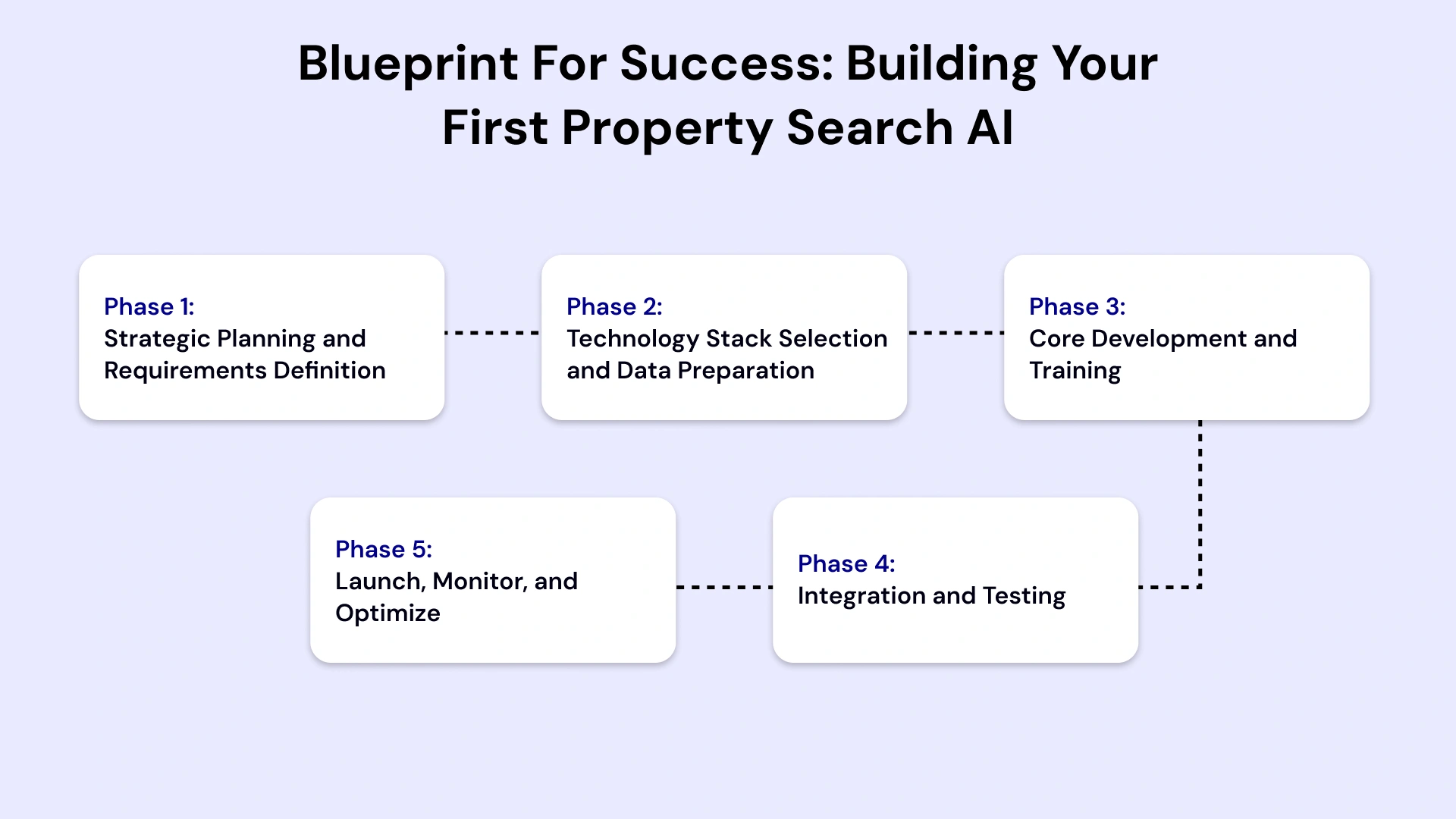
Phase 1: Strategic Planning and Requirements Definition
Begin by clearly defining success criteria for your property search chatbot implementation guide initiative. Establish specific, measurable objectives, such as increasing chatbot engagement by 40%, reducing response times to under 30 seconds, or decreasing cost-per-qualified-lead by 50%.
Conduct thorough user research to understand your target audience's pain points, preferences, and typical property search journeys. Analyze existing customer inquiries to identify the most common questions, concerns, and information needs your chatbot must address when planning your implementation strategy of a property search chatbot.
Map out detailed conversation flows for primary use cases, including initial property searches, follow-up questions, chatbot-assisted appointment scheduling for property inquiry automation, document requests, and escalation to human agents. This blueprint guides your development team and ensures alignment with business goals.
Phase 2: Technology Stack Selection and Data Preparation
Choose your development approach based on internal capabilities, budget constraints, and customization requirements. Options range from low-code property chatbot platform solutions suitable for basic implementations to custom development using AI frameworks for highly specialized functionality.
For retail real estate companies with unique requirements or extensive property portfolios, working with an AI chatbot development company or a specialized AI chatbot development agency typically delivers superior results, despite the higher upfront investment. Platforms like Rasa, Microsoft Bot Framework, or Google Cloud's Dialogflow CX provide robust foundations for sophisticated implementations.
Simultaneously, prepare your property data for chatbot integration with IDX systems or other property feeds. This involves cleaning and structuring property information, standardizing descriptions, optimizing images, and ensuring data quality across your entire inventory. Poor data quality undermines even the most sophisticated AI algorithms.
Phase 3: Core Development and Training
During development, prioritize creating a minimum viable product (MVP) that handles core property search functionality before expanding to advanced features. This iterative approach allows you to launch quickly, gather real user feedback, and refine based on actual usage patterns rather than assumptions.
Train your NLP models using diverse example phrases that reflect how real users express property search needs. Include variations in terminology, common misspellings, industry jargon, and regional language differences to maximize understanding accuracy.
Implement fallback mechanisms that gracefully handle queries outside your chatbot's current capabilities. These safety nets prevent dead-end conversations and maintain positive user experiences even when the AI encounters unfamiliar inputs.
Phase 4: Integration and Testing
Connect your property search AI chatbot to all relevant systems, including property management software, CRM platforms, email marketing tools, and analytics systems. These integrations transform your chatbot from a standalone tool into a central hub that orchestrates your entire customer engagement ecosystem.
Conduct comprehensive testing across multiple dimensions. Functional testing ensures all features work correctly; conversation flow testing validates that dialogues feel natural and achieve objectives; integration testing confirms that data flows properly between systems; and load testing verifies performance under high-volume conditions.
Engage real users in beta testing to uncover issues that internal teams might miss. Their authentic feedback reveals usability problems, confusing conversation paths, or missing functionality, which could undermine your chatbot's effectiveness through effective chatbot optimization for search accuracy.
Phase 5: Launch, Monitor, and Optimize
Launch your property search AI chatbot with clear communication to users about its capabilities and how to access it. Consider a phased rollout that deploys the chatbot to a subset of users initially, allowing you to address any unforeseen issues before the full-scale launch.
Implement comprehensive analytics tracking key performance indicators, including conversation completion rates, user satisfaction scores, lead generation metrics, and common failure points where users abandon or request human assistance.
Establish a continuous improvement process that regularly analyzes chatbot performance, identifies enhancement opportunities, and implements refinements. The most successful property search AI chatbots evolve constantly based on user behavior and changing business needs.

Advanced Capabilities That Differentiate Leading Property Search AI Chatbots
Once your foundational property search AI chatbot is operational, consider implementing advanced features that create competitive advantages and deliver exceptional experiences.
Predictive Analytics and Proactive Engagement
Instead of waiting for users to initiate conversations, sophisticated AI chatbots analyze visitor behavior in real-time and proactively engage when patterns suggest interest or confusion. If someone views multiple similar retail properties but doesn't inquire, your chatbot can initiate a helpful conversation to offer assistance or highlight key features.
Predictive models identify high-intent prospects based on engagement signals, enabling your sales team to prioritize outreach to users most likely to convert through a chatbot for commercial real estate applications.
Voice-Enabled Interactions
Voice interfaces represent the next frontier in property search convenience. Integrating voice capabilities via platforms like Amazon Alexa, Google Assistant, or custom voice AI enables users to search for properties hands-free while multitasking—particularly valuable for busy retail professionals exploring relocation options.
Voice-enabled property search AI chatbots must handle the unique challenges of spoken language, including accents, background noise, and the tendency for people to phrase voice queries differently than they do in text searches.
Virtual Property Tours and Augmented Reality
Cutting-edge chatbots for physical store discovery solutions integrate immersive technologies that allow prospects to experience properties without physical visits. Virtual reality walkthroughs, 360-degree photo tours, and augmented reality features that visualize how retail spaces could be customized create powerful engagement experiences.
These capabilities are especially valuable for retail real estate companies serving national or international clients who cannot easily visit properties in person, as chatbots on location intelligence platforms can provide location intelligence.
Multi-Language Support for Global Markets
For retail real estate businesses operating across diverse markets, multi-language property search AI chatbots, available via WhatsApp chatbots or website property chatbots, eliminate communication barriers. Advanced systems don't simply translate text but truly understand queries in multiple languages, maintaining natural conversational flow regardless of language choice.
This capability dramatically expands your addressable market and demonstrates cultural sensitivity that resonates with international prospects through a chatbot for applicant availability updates in their preferred language.
Overcoming Common Implementation Challenges
Even well-planned property search AI chatbot projects encounter obstacles. Anticipating these challenges helps you navigate them successfully.
Managing User Expectations
Users bring varied expectations about chatbot capabilities based on their experiences with other AI systems. Some expect human-level understanding; others assume minimal functionality. Clearly communicate your chatbot's capabilities upfront and set realistic expectations about what it can and cannot do. Include clear pathways to human assistance for complex scenarios that exceed your chatbot's current abilities, ensuring users never feel trapped in frustrating loops.
Ensuring Data Privacy and Security
Property searches often involve sensitive information, including financial details, business plans, and personal preferences. Your property search AI chatbot must implement robust security measures, including data encryption, secure authentication, and compliance with privacy regulations like GDPR and CCPA.
Be transparent about how you collect, use, and store conversation data, providing users control over their information through clear privacy policies and opt-out mechanisms.
Maintaining Conversation Quality at Scale
As your property search AI chatbot handles increasing volumes of conversations, maintaining consistent quality becomes challenging. Implement quality assurance processes that regularly review conversation samples, identify problematic patterns, and address issues through training improvements or conversation design refinements. Monitor user satisfaction metrics closely and investigate any declining trends immediately to prevent negative experiences from damaging your brand reputation.
Measuring Success: KPIs for Property Search AI Chatbots
Effective measurement frameworks ensure your property search AI chatbot delivers tangible business value and guides optimization efforts.
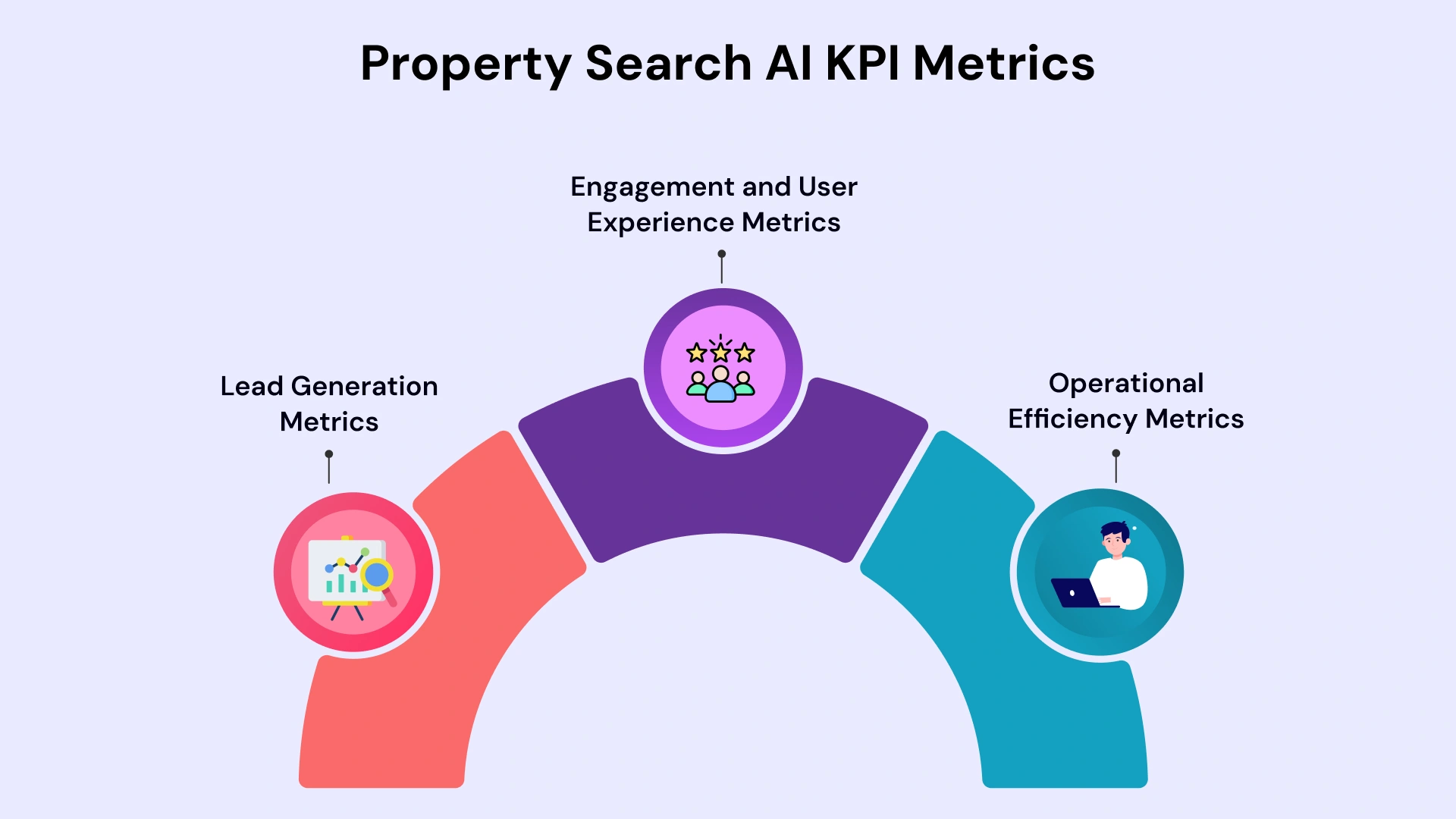
Lead Generation Metrics
Track the number of qualified leads generated through chatbot interactions and compare them with leads from other channels to assess relative effectiveness. Measure lead-to-opportunity conversion rates specifically for chatbot-generated leads to understand the downstream impact.
Calculate cost-per-lead for your chatbot channel, factoring in development costs, ongoing maintenance, and operational expenses to determine ROI compared to traditional lead generation methods.
Engagement and User Experience Metrics
Monitor conversation completion rates to see how often users achieve their objectives without abandoning the chatbot. Track average conversation length and number of exchanges per conversation to identify whether interactions feel natural or if users struggle to achieve goals.
Implement user satisfaction surveys immediately after chatbot interactions to gather direct feedback on experience quality and areas for improvement.
Operational Efficiency Metrics
Measure the percentage of inquiries fully resolved by the chatbot without human intervention, quantifying the operational efficiency gains your AI investment delivers, and track average response time for chatbot interactions compared to human agent response times, demonstrating the speed advantage AI provides.
Calculate the number of simultaneous conversations your chatbot handles during peak periods, and illustrate the scalability benefits that would be impossible with a human-only team.
Future-Proofing Your Property Search AI Chatbot Investment
Technology evolves rapidly, and successful property search AI chatbot implementations anticipate future developments to ensure long-term value by understanding the future of AI chatbots in real estate.
Adopting Agentic AI Capabilities
The next generation of property search AI chatbots will incorporate agentic AI for property search—systems powered by autonomous AI agents that can take autonomous actions on behalf of users rather than merely providing information. These advanced chatbots could automatically schedule property tours, submit lease applications, coordinate document exchanges, and manage the entire leasing process with minimal human intervention.
Planning for this evolution ensures your current architecture can accommodate these capabilities as they mature and become commercially viable.
Integrating with Emerging Technologies
Stay aware of emerging technologies that could enhance your property search AI chatbot, including blockchain for secure transaction processing, Internet of Things (IoT) data for real-time property condition monitoring, and advanced AI models development that enable even more sophisticated natural language understanding. Build flexible, modular architectures that let you incorporate new technologies without a complete system overhaul.
Fostering Continuous Learning and Improvement
The most successful property search AI chatbots never stop learning. Implement systems for continuously training your AI models on new conversations, regularly updating property information, and refining conversation flows based on user feedback and changing business priorities. Create cross-functional teams including real estate professionals, data scientists, and customer experience specialists who collaborate on ongoing chatbot optimization, ensuring technical capabilities align with business needs.

Elevate Your Real Estate Platform with VLink's AI Chatbot Expertise
Building a transformative AI chatbot requires more than code—it requires deep industry insight and a track record of ROI. VLink bridges the gap between advanced AI and retail real estate, helping North American and Indian firms convert property searches into qualified leads.
Why Industry Leaders Choose VLink
Industries choose Vlink's AI chatbot development services because of our:
- Domain Expertise: We specialize in retail real estate (malls, mixed-use, and commercial) and understand the nuances of property qualification and compliance.
- Advanced AI Stack: Our bots use custom-trained NLP and recommendation engines that outperform generic, one-size-fits-all platforms.
- Seamless Integration: We ensure your bot talks to your CRM, property management software, and marketing tools from day one.
- Scalable & Future-Proof: Our modular architecture grows with your portfolio, preventing the need for costly future rebuilds.
- End-to-End Lifecycle: From initial strategy and UX design to launch and ongoing performance optimization, we manage the entire process.
Our Proven 5-Phase Methodology
- Discovery: Aligning bot strategy with your specific business goals and customer journeys.
- Design: Crafting intuitive, natural conversation flows and interactive prototypes.
- Development: Engineering custom AI models and integrating your existing tech stack.
- Testing: Rigorous functional and user-acceptance testing to ensure flawless performance.
- Optimization: Post-launch monitoring and data-driven updates to maximize long-term ROI.
Don't let outdated customer engagement approaches cost you valuable leads and competitive advantage. Schedule a consultation with VLink's AI specialists to discover how a custom property search AI chatbot can transform your retail real estate business.
During your consultation, we'll discuss your specific objectives, review successful implementations in similar retail real estate contexts, and outline a tailored development roadmap with realistic timelines and investment requirements—no obligations—just expert guidance on leveraging AI to achieve your business goals.
Conclusion
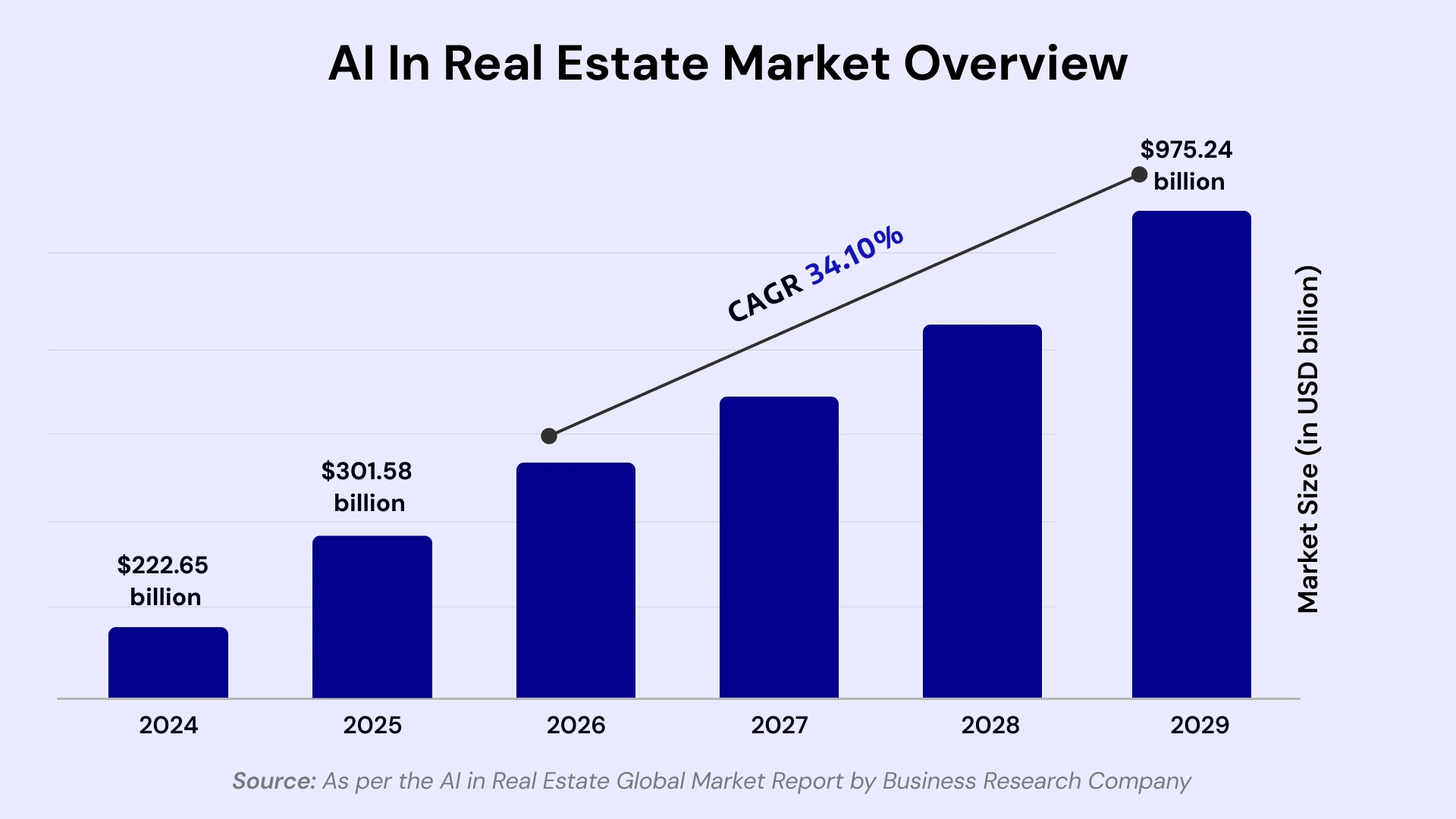
Building a property search AI chatbot represents a transformative opportunity for retail real estate companies to revolutionize customer experiences, generate higher-quality leads, and operate more efficiently. The explosive 34.1% CAGR in AI real estate technology adoption signals that industry leaders recognize these systems as essential infrastructure rather than experimental innovations.
Success requires strategic planning, user-centric design, robust technical architecture, and commitment to continuous improvement. Companies that move decisively today will establish competitive advantages that compound over time as their AI systems learn and improve. Your property search AI chatbot journey begins with envisioning how AI could transform your operations and committing to making that vision a reality.

Vice President, Strategy – VLink Inc.
Sambhavi Gopalakrishnan is the Vice President of Strategy at VLink Inc., bringing over a decade of experience in IT leadership, project implementation, and strategic growth. She possesses a strong foundation in technical project management and pre-sales, driving innovation and business transformation at VLink.

 Shivisha Patel