

The Canadian healthcare system stands at a critical inflection point. While medical professionals dedicate their careers to patient care, they're drowning in administrative tasks that consume 35-40% of their workday. For CISOs and Chief Data Officers in healthcare organizations, this isn't just an operational challenge—it's a strategic imperative that directly impacts both bottom-line performance and patient outcomes.
This comprehensive guide explores the ROI of agentic AI in hospitals, the ROI of agentic AI in Canadian medical administration, and the transformative impact of autonomous AI agents for healthcare Canada. We'll examine how AI-driven healthcare workflow automation in Canada is reducing administrative costs while improving patient outcomes and operational efficiency.

Understanding Agentic AI: The Foundation of Healthcare Transformation
Traditional AI tools require constant human oversight. They're reactive, waiting for prompts and instructions. The roles of agentic AI in medical industry represent a fundamental paradigm shift—these systems proactively identify problems, develop solutions, execute actions, and learn from results without continuous human intervention.
In the context of AI-driven healthcare operations in Canada, this distinction is transformative. While a standard AI chatbot might help schedule an appointment when prompted, an agentic AI system monitors appointment patterns, identifies scheduling inefficiencies, automatically optimizes physician calendars, communicates changes to patients, updates electronic health records, and adjusts resource allocation—all autonomously, 24/7.
The Core Capabilities Driving Healthcare ROI
The value of agentic AI in the Canadian medical landscape is built on four pillars that turn technological potential into measurable financial and clinical returns:
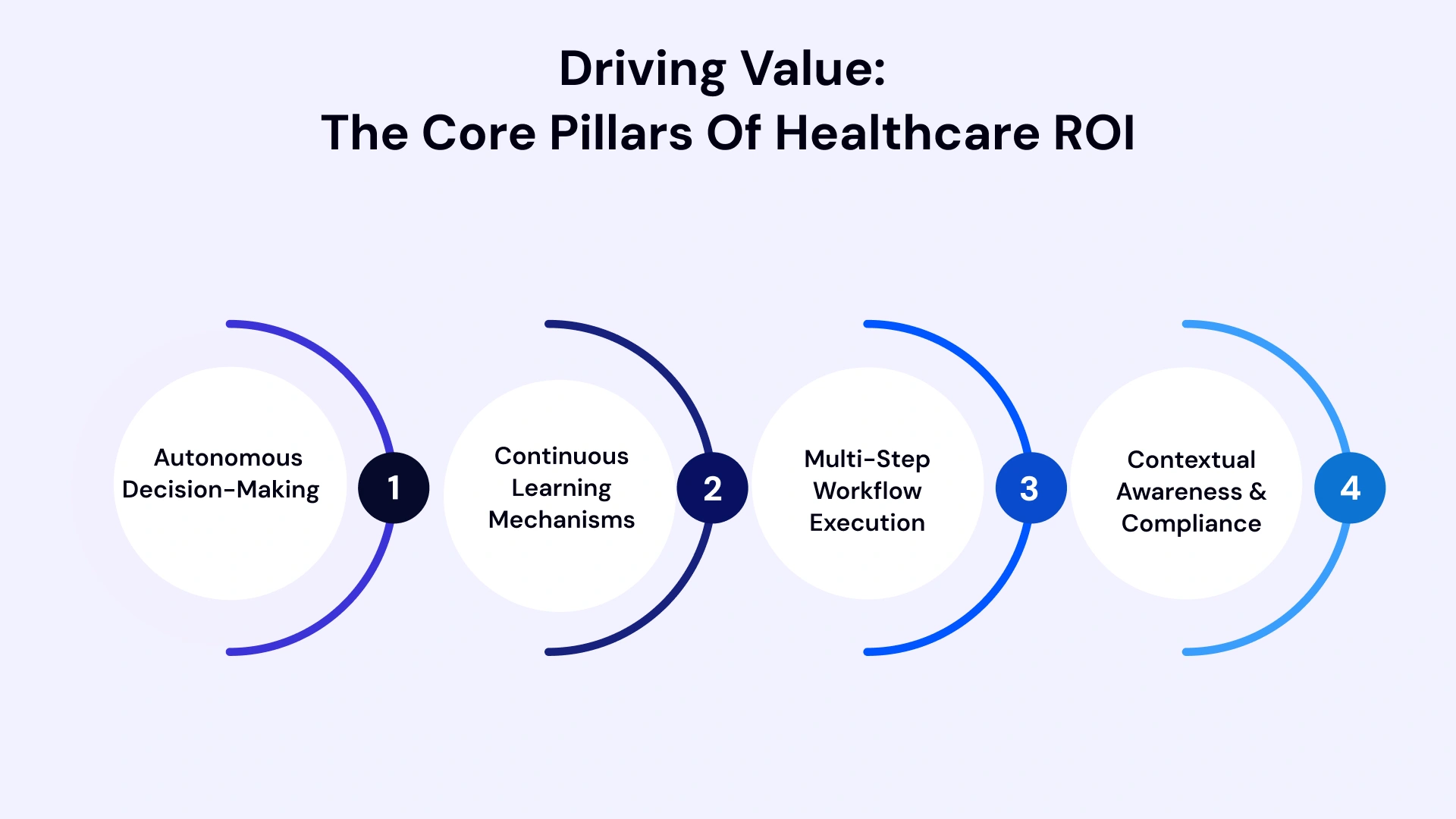
- Autonomous Decision-Making: Powered by advanced reasoning engines, AI agents evaluate diverse data sources and weigh options against specific parameters. They can execute optimal choices for routine scenarios without requiring constant human intervention, significantly speeding up operational throughput.
- Continuous Learning Mechanisms: These systems don't just perform; they evolve. By analyzing every interaction and edge case, agentic AI creates a feedback loop of compound efficiency. Over time, this helps alleviate the clinician burnout crisis in Canada by systematically stripping away administrative friction.
- Multi-Step Workflow Execution: Unlike basic automation, agentic AI handles complex, cross-departmental processes. A primary example is prior authorization automation, in which the AI coordinates across multiple stakeholders and systems to complete high-value workflows that typically bog down administrative staff.
- Contextual Awareness & Compliance: These agents understand the "why" behind the "what." They maintain a deep understanding of organizational objectives and—crucially for the Canadian market—adhere to PIPEDA and provincial health information acts. This ensures that autonomous operations remain high-quality and fully compliant with federal and provincial regulations.
For healthcare organizations operating under provincial regulations and federal privacy standards, this contextual awareness proves particularly valuable. Agentic AI systems can be trained on Canadian healthcare compliance frameworks, ensuring every autonomous action aligns with PIPEDA requirements and provincial health information acts—critical considerations for the ROI of agentic AI in Canadian hospitals.
The 35% Administrative Reduction: Breaking Down the Numbers
The headline figure—35% reduction in medical administrative burden in Canada—represents an average across multiple implementation studies in North American healthcare settings. However, the ROI of agentic AI Canada varies significantly based on implementation scope, existing infrastructure, and organizational readiness.
Documentation and Clinical Note-Taking
The documentation burden in healthcare in Canada consumes approximately 16% of physicians' time, according to studies by the Canadian Medical Association. Agentic AI systems equipped with ambient listening capabilities can autonomously generate clinical notes during patient encounters, extracting relevant information, populating structured data fields in EHR systems, and suggesting diagnostic codes—all while the physician focuses entirely on the patient.
Early implementations in Ontario hospitals have demonstrated 60-70% time savings in documentation workflows. For a hospital with 200 physicians, each spending 2 hours daily on documentation, this translates to 14,000 hours reclaimed annually per 100 physicians—time redirected to direct patient care or to addressing healthcare staffing shortages, a crisis affecting medical systems nationwide.
The financial impact extends beyond time savings. Improved documentation accuracy through AI automation for medical billing in Canada reduces claim denials, enhances coding specificity for more accurate reimbursement, and strengthens medical-legal protection. Organizations leveraging Healthcare software development services report 15-20% improvements in coding accuracy and 12% reductions in claim rejections within the first six months of deployment.
Prior Authorization and Insurance Verification
Prior authorization automation in Canada represents one of the most resource-intensive administrative processes in healthcare. Canadian hospitals processing thousands of prior authorization requests monthly typically employ dedicated teams spending 30-45 minutes per request gathering clinical documentation, contacting insurers, following up on pending requests, and communicating decisions.
The ROI of AI in Canadian healthcare becomes immediately apparent when agentic AI systems autonomously handle end-to-end prior authorization workflows. They monitor patient schedules and procedure orders, automatically initiate authorization requests when required, gather necessary clinical documentation from EHR systems, submit requests through insurer portals or APIs, track request status and automatically follow up, communicate decisions to relevant stakeholders, and escalate only complex cases requiring human expertise.
Organizations partnering with a software development company in Canada implementing these systems report 40-50% reductions in prior authorization processing time and 80% decreases in authorization-related appointment delays. For a mid-sized hospital processing 500 prior authorizations monthly, this represents savings of 200-250 staff hours—approximately $60,000-$75,000 in labor costs alone, not accounting for improved patient satisfaction and reduced appointment cancellations.
Patient Scheduling and Communication Automation
Traditional appointment scheduling involves multiple touchpoints: initial patient calls, insurance verification, physician availability checks, patient preference accommodation, appointment confirmation, and reminder communications. Each touchpoint carries labor costs and potential friction points that lead to no-shows or cancellations, contributing to healthcare wait times in Canada.
Patient scheduling automation in Canada transforms this process into a seamless, autonomous workflow. These systems integrate with EHR platforms, practice management software, and communication channels to handle intelligent scheduling based on appointment type, physician availability, patient history, and location, automated insurance verification and eligibility checks, proactive patient communication via preferred channels (SMS, email, voice), dynamic rescheduling when cancellations occur to minimize gaps, and waitlist management with automatic patient outreach when openings arise.
The ROI of agentic AI in Canadian medical administration for scheduling extends beyond efficiency. Organizations report 25-30% reductions in no-show rates through optimized reminder timing and communication personalization, 20% increases in appointment volume through better schedule optimization, and 40% decreases in scheduling staff workload, allowing redeployment to higher-value patient support roles.
Quantifying ROI: A Framework for Canadian Healthcare Organizations
Calculating the cost of agentic AI in medical implementations requires a comprehensive framework that captures both tangible and strategic value. For CISOs and CDOs building business cases, this multi-dimensional approach to understanding the ROI of AI in Canadian healthcare proves essential for securing executive buy-in and board approval.
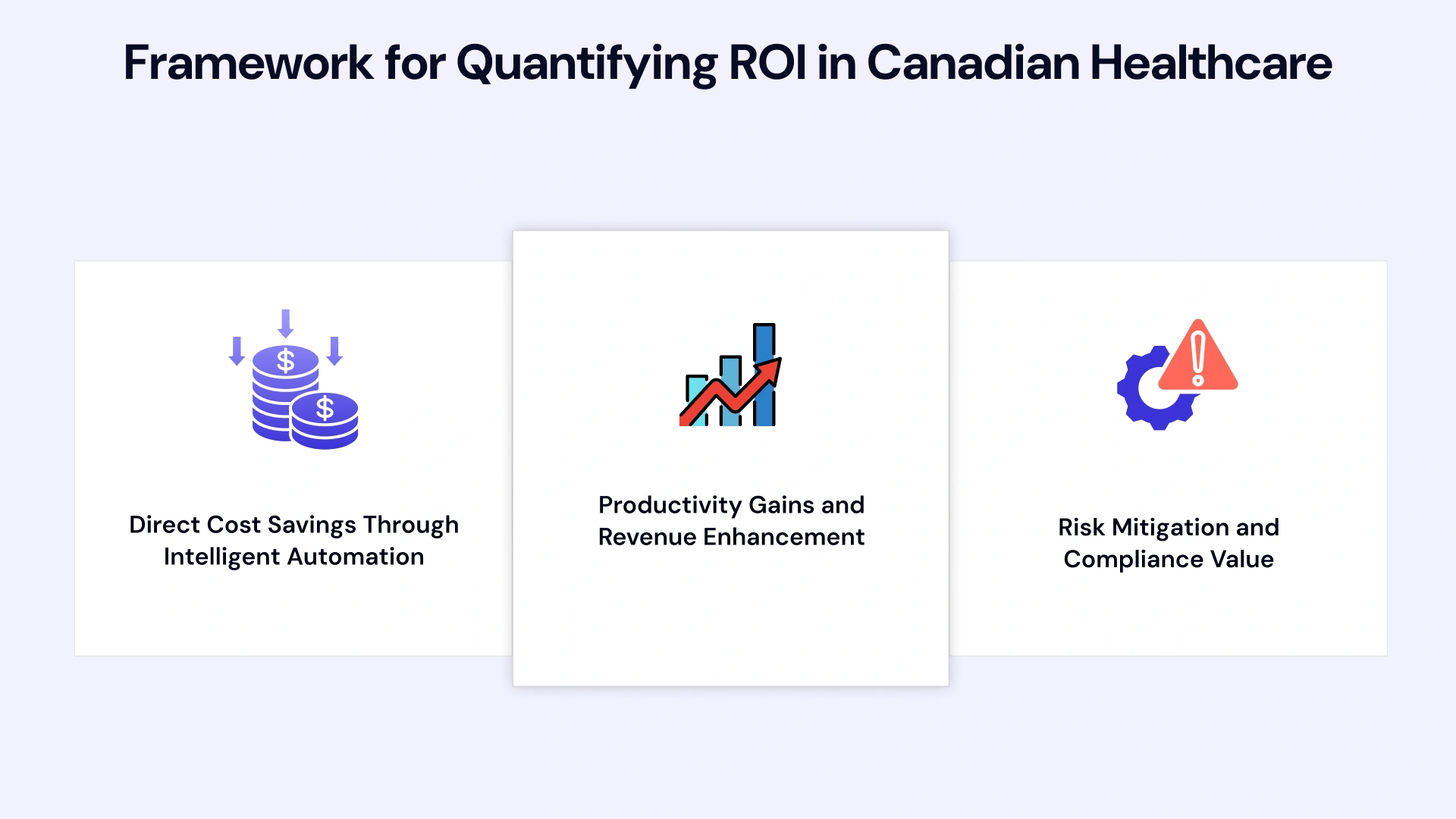
Direct Cost Savings Through Intelligent Automation
Direct cost savings represent the most straightforward ROI component when evaluating how Canadian hospitals reduce admin costs using AI. These include labor cost reductions from administrative automation, freeing staff hours for redeployment or natural attrition; operational expense decreases, including reduced overtime, temporary staffing, and administrative supplies; and improved revenue cycle performance through faster claims submission, reduced denials, and enhanced coding accuracy.
A 300-bed hospital in Ontario implementing comprehensive agentic AI across administrative functions through AI development services in Ontario typically realizes $1.2-$1.8 million in direct annual savings. The implementation investment—including software licensing, integration services, training, and change management—typically ranges from $400,000 to $800,000, with payback periods of 6-12 months.
Organizations leveraging AI development services in Canada that specialize in healthcare contexts often achieve faster implementations and superior results through pre-built integrations, industry-specific templates, and a deep understanding of Canadian healthcare regulatory requirements.
Productivity Gains and Revenue Enhancement
Beyond cost avoidance, autonomous agents in Canadian healthcare workflows generate positive revenue. Physicians reclaiming 20-30% of administrative time can increase patient volume by 10-15%, translating directly to revenue growth. A primary care physician seeing an additional 3-5 patients daily generates $150,000-$250,000 in incremental annual revenue.
The healthcare AI business case in Canada strengthens significantly when accounting for improved scheduling that reduces gaps and cancellations, increasing facility utilization rates by 8-12%. For outpatient facilities operating at 75% capacity, this optimization can generate $500,000-$1.5 million in additional annual revenue without capital expansion—a critical consideration given the limitations of RPA in Canadian healthcare for achieving similar results.
Enhanced patient experience through seamless scheduling, proactive communication, and reduced administrative friction also improves patient retention and referral rates. While harder to quantify precisely, organizations report 15-20% increases in patient satisfaction scores, correlating with 5-8% improvements in patient retention—a critical metric as patient acquisition costs continue rising across the Canadian healthcare system.
Risk Mitigation and Compliance Value
For CISOs evaluating AI automation ROI in healthcare, agentic AI delivers significant risk-mitigation value that is often overlooked in traditional ROI calculations. Autonomous systems maintain consistent compliance with regulatory requirements, documentation standards, and privacy protocols—reducing exposure to violations, penalties, and audit findings.
Manual administrative processes carry inherent error rates of 2-5% depending on complexity and volume. Intelligent automation healthcare ROI Canada demonstrates that agentic AI systems typically operate with error rates below 0.5% and continue to improve over time. For organizations processing hundreds of thousands of administrative transactions annually, this accuracy improvement prevents costly errors, reduces compliance risk, and minimizes medical-legal exposure.
The Canadian healthcare context adds specific compliance considerations around PIPEDA, provincial health information acts, and French-language requirements in Quebec and New Brunswick. AI development services in Canada that specialize in healthcare implementations build these requirements into agentic AI systems from inception, ensuring compliance is autonomous rather than requiring constant oversight.
Strategic Implementation: The Path to 35% Reduction
Achieving the full 35% administrative reduction and maximizing AI-driven healthcare cost savings in Canada requires a strategic implementation that addresses technology, processes, and organizational change simultaneously.
Organizations that treat agentic AI as merely a technology deployment typically achieve only 40-50% of potential value. Those embracing comprehensive transformation realize the full benefits and the potential for continued gains as AI capabilities advance.
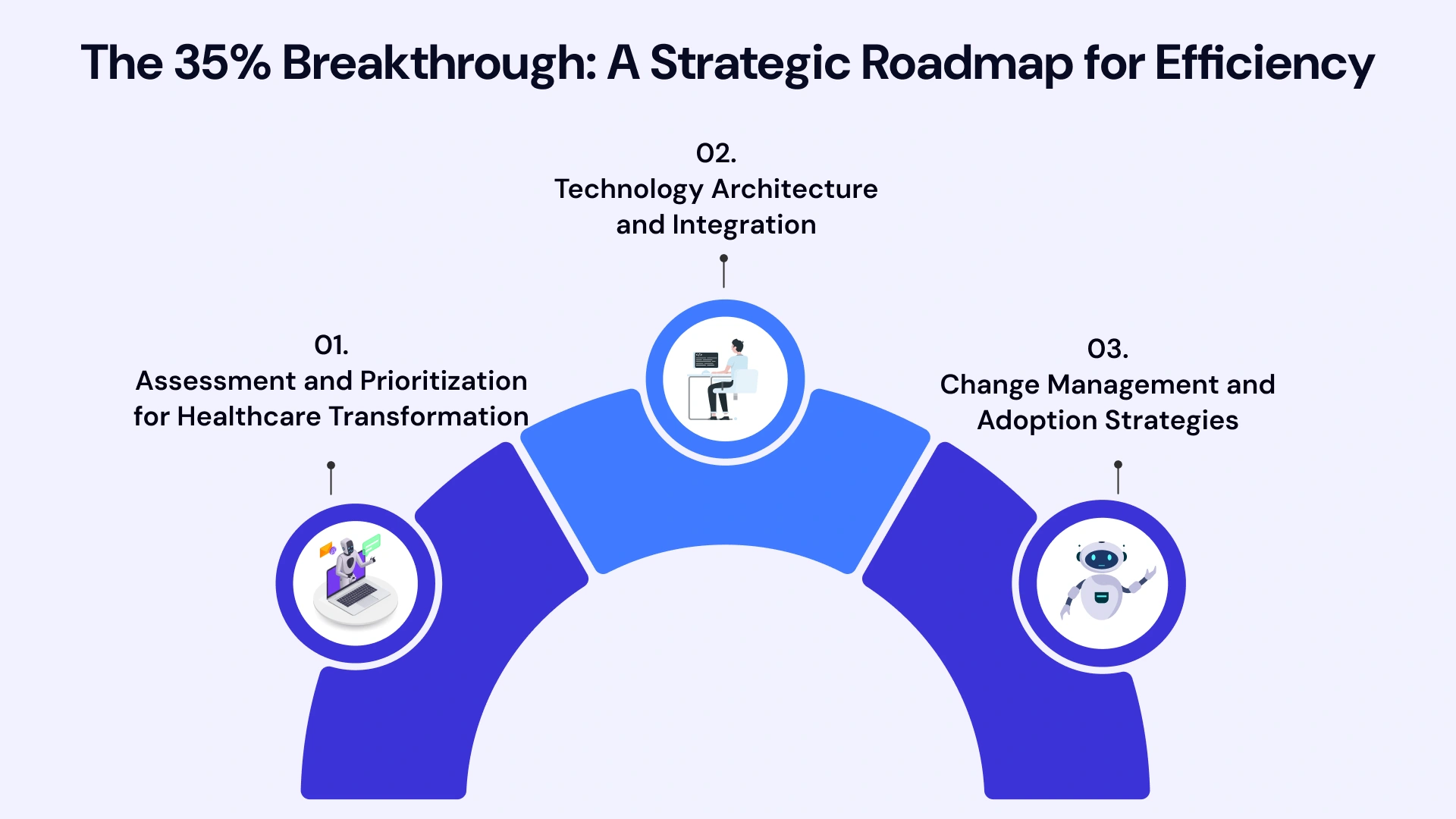
Assessment and Prioritization for Healthcare Transformation
Implementation begins with a comprehensive assessment of current administrative workflows, identifying processes that consume the most resources, generate the most errors, create the greatest patient friction, and offer the clearest ROI potential. This assessment should map data flows, system integrations, decision points, and exception handling to determine agentic AI readiness.
Healthcare organizations in Canada often discover that 20% of administrative processes consume 80% of resources. Prioritizing these high-impact workflows for initial implementation yields quick wins that build organizational momentum and justify continued investment—essential for demonstrating the benefits of agentic AI to skeptical stakeholders in the medical industry.
The assessment phase should also evaluate data infrastructure readiness for healthcare operational efficiency AI Canada. Agentic AI systems require access to structured and unstructured data across EHR platforms, practice management systems, billing software, and communication channels. Organizations with fragmented systems or poor data quality must address these foundations before realizing the full value of agentic AI.
Technology Architecture and Integration
Successful agentic AI implementation requires a robust technology architecture that enables autonomous operation while maintaining security, auditability, and human oversight capabilities. Healthcare software development services specializing in Canadian healthcare contexts design architectures that address several critical requirements for AI agents for hospital operations in Canada.
First, secure API integration with existing systems allows agentic AI to access and update data across platforms without creating security vulnerabilities or compliance gaps. This integration layer must handle authentication, authorization, data encryption, and audit logging to meet the essential healthcare security standards of the Canadian healthcare system.
Second, the architecture must support both real-time and batch processing, depending on use-case requirements. Patient scheduling automation Canada demands real-time responsiveness, while billing coding optimization may operate on batch schedules, addressing the administrative burden in Canadian healthcare.
Third, the system requires sophisticated monitoring and governance capabilities that track agentic AI decisions, flag anomalies for human review, maintain detailed audit trails for compliance, and provide dashboards for performance monitoring and optimization—capabilities critical to implementing the strategy for deploying agentic AI in medical environments.
A software development company in Canada with healthcare expertise understands provincial variations in requirements and can architect systems that accommodate multi-provincial operations while respecting jurisdictional differences affecting the ROI of agentic AI in hospitals across different provinces.
Change Management and Adoption Strategies
Technology represents only 30-40% of successful agentic AI implementation. The remaining value comes from effective change management that addresses staff concerns about clinician burnout in Canada, redesigns workflows to leverage autonomous capabilities, and creates an organizational culture that embraces human-AI collaboration.
Healthcare staff often express concerns that AI will replace jobs or make decisions without proper oversight. Effective change management reframes the conversation around augmentation rather than replacement—agentic AI handles repetitive, rules-based tasks while humans focus on complex problem-solving, patient interaction, and clinical judgment.
Organizations achieving the full 35% reduction in healthcare administrative costs Canada invests heavily in training programs that help staff understand agentic AI capabilities and limitations, develop skills for supervising autonomous systems, and identify opportunities for further automation. They also redesign roles to capture freed capacity, preventing staff from simply filling time with busywork that negates efficiency gains.

Industry-Specific Applications: ROI of Agentic AI in Hospitals
The ROI of agentic AI in Canadian hospitals spans virtually every administrative function, but certain applications deliver outsized impact, particularly in addressing healthcare staffing shortages and wait times.
Emergency Department Administration
Canadian emergency departments face chronic overcrowding and long wait times that strain both staff and patients. While clinical factors drive some delays, administrative bottlenecks significantly contribute to the problem—an area where AI agents for hospital operations in Canada deliver immediate impact.
Agentic AI systems deployed in emergency departments autonomously handle patient registration and insurance verification, bed and resource allocation optimization, automated communication with inpatient units for admission coordination, supply inventory monitoring and automated reordering, and real-time dashboard updates for staff situational awareness.
Hospitals implementing AI-driven healthcare operations in Canada in emergency settings report 15-20% reductions in average length of stay, 25% improvements in patient throughput, and 30% decreases in administrative workload for emergency department staff—allowing them to focus on patient care during high-volume periods while reducing the documentation burden in healthcare Canada.
Surgical Services Coordination
Surgical services involve complex coordination across multiple departments, staff, and resources. Traditional manual healthcare processes in Canada in surgical coordination create inefficiencies, delays, and suboptimal resource utilization.
AI agents for healthcare Canada in surgical services autonomously manage operating room scheduling optimization based on procedure type, surgeon preferences, and equipment availability, pre-operative checklist completion and documentation, supply chain coordination ensuring necessary equipment and implants are available, post-operative bed allocation and transfer coordination, and billing documentation to capture all chargeable services and supplies.
Canadian hospitals implementing these autonomous AI agents in healthcare Canada systems increase OR utilization by 10-15% without adding physical capacity—representing millions in additional revenue for high-volume surgical centers. They also reduce surgical delays and cancellations by 30-40%, improving patient satisfaction and outcomes while demonstrating clear AI healthcare cost savings in Canada.
Chronic Disease Management Programs
Canada's aging population drives the increasing prevalence of chronic diseases requiring ongoing monitoring, medication management, and lifestyle intervention. Traditional models rely on scheduled appointments supplemented by patient-initiated contact when problems arise—an approach that misses early warning signs and leads to costly acute episodes.
Healthcare workflow automation AI Canada enables proactive chronic disease management through automated patient monitoring via connected devices and patient-reported data, intelligent alert generation when parameters exceed thresholds, autonomous patient outreach with education and intervention recommendations, medication adherence monitoring and intervention, and appointment scheduling when in-person assessment is needed.
Healthcare organizations report 20-25% reductions in acute episodes among chronic disease patients enrolled in AI-managed programs, 40% improvements in medication adherence, and 30% decreases in unnecessary emergency department visits—delivering both improved outcomes and significant cost savings, demonstrating the ROI of agentic AI Canada across both acute and chronic care settings.
The Canadian Context: Unique Considerations for ROI
While agentic AI principles apply globally, Canadian healthcare organizations face unique considerations that impact ROI calculations and implementation approaches for agentic AI in healthcare Canada.
Provincial Healthcare Variations
Canada's provincial healthcare systems operate under different regulatory frameworks, reimbursement models, and technology standards. The strategy to implement agentic AI in medical contexts must accommodate these variations while maintaining consistent performance and compliance.
AI development services in Ontario may need to integrate with different EHR platforms and billing systems than implementations in British Columbia or Quebec. Software development companies in Canada with multi-provincial experience design flexible architectures that adapt to jurisdictional requirements without requiring a complete redesign for each province.
Organizations operating across multiple provinces realize additional ROI from agentic AI in Canadian hospitals through standardized agentic AI platforms that reduce the cost and complexity of managing disparate systems across jurisdictions—a consideration unique to the Canadian healthcare system.
Bilingual Requirements and Cultural Competency
Quebec and parts of New Brunswick require healthcare services in both English and French. For autonomous AI agents in healthcare workflows, Canada must support bilingual interactions, documentation, and communications to serve these populations effectively and comply with language requirements.
Advanced natural language processing capabilities enable agentic AI to seamlessly switch between languages based on patient preference, generate documentation in the appropriate language, and maintain context and accuracy across languages—capabilities that would be prohibitively expensive to replicate with human staff for all interactions, demonstrating the benefits of agentic AI for the medical industry in bilingual contexts.
Privacy and Data Governance
The Canadian healthcare system operates under PIPEDA at the federal level and provincial health information acts that impose strict requirements on data collection, use, disclosure, and retention. Agentic AI systems must be designed with privacy-by-design principles that ensure autonomous operations comply with these requirements.
This includes implementing automated consent management, data minimization to collect and retain only necessary information, audit logging of all data access and use, automated breach detection and response, and transparent explainability of AI decisions affecting patient care or privacy.
AI predictive maintenance services in Canada help healthcare organizations continuously monitor agentic AI systems for compliance drift, performance degradation, and security vulnerabilities—ensuring the ROI gains from reducing healthcare administrative costs Canada initiatives are sustainable over time without creating new risk exposures.
Measuring Success: KPIs for Agentic AI ROI
Demonstrating the ongoing ROI of AI in Canadian healthcare requires establishing clear key performance indicators that track both efficiency gains and strategic value creation. Healthcare organizations should implement comprehensive measurement frameworks across multiple dimensions to evaluate how Canadian hospitals reduce admin costs using AI.
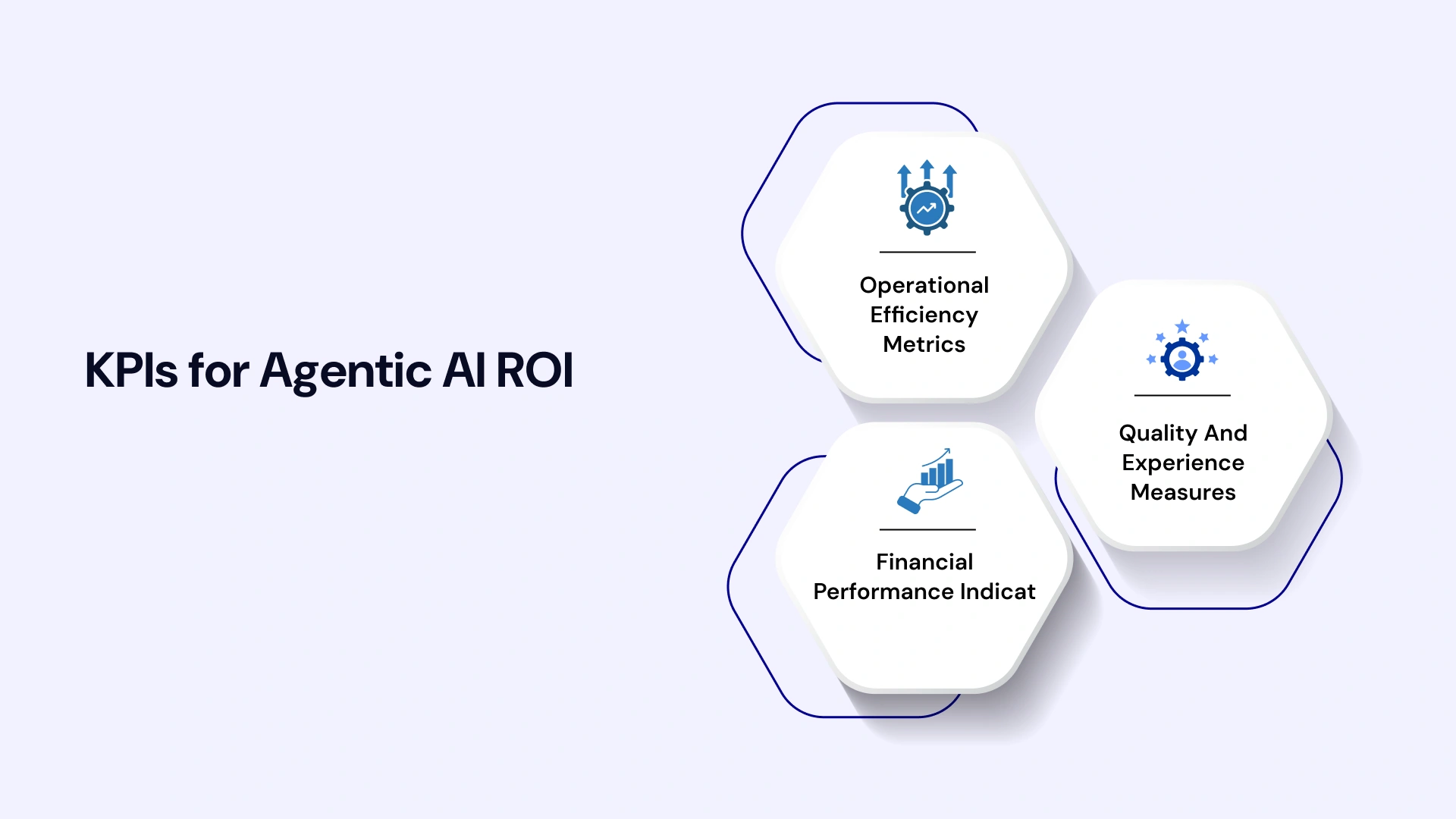
1. Operational Efficiency Metrics
Operational metrics provide concrete evidence of the administrative burden in Canadian healthcare. Key indicators include administrative hours per patient encounter, prior authorization processing time, and approval rates tracked through prior authorization automation Canada systems, appointment scheduling time and no-show rates monitored via patient scheduling automation Canada platforms, billing days outstanding and claim denial rates improved through AI automation for medical billing Canada, and staff overtime hours and use of temporary staffing.
Leading organizations establish baseline measurements before implementation, then track monthly progress toward targets. The 35% administrative reduction goal translates into specific targets for each metric, based on organizational priorities and the scope of implementation for the healthcare workflow automation AI Canada initiatives.
2. Financial Performance Indicators
Financial KPIs connect operational improvements to bottom-line impact when evaluating the healthcare AI business case in Canada. Critical metrics include direct cost savings from reduced administrative labor, demonstrating AI healthcare cost savings in Canada; revenue enhancement from increased patient volume; improved billing through intelligent automation; healthcare ROI Canada; and return on investment calculations comparing costs to financial benefits.
Healthcare CFOs increasingly demand sophisticated financial modeling that accounts for implementation costs, ongoing licensing and maintenance, staff training and change management, and expected benefits over 3-5 year horizons. Healthcare software development services specializing in Canadian healthcare can provide industry benchmarks and financial modeling support to inform these analyses for the cost of agentic AI in medical implementations.
3. Quality and Experience Measures
The ultimate ROI of agentic AI in hospitals includes improvements in care quality and patient experience, as well as reductions in healthcare wait times in Canada. Organizations should track patient satisfaction scores and feedback, physician satisfaction with reduced administrative burden—a key metric for addressing clinician burnout —and compliance audit findings and regulatory violations. In Canada, clinical documentation quality and completeness improved through documentation burden-reduction solutions.
Improved quality and experience metrics may not immediately translate to financial returns but drive long-term value through patient retention, physician recruitment and retention, and enhanced organizational reputation—factors increasingly important in competitive Canadian healthcare markets and essential for demonstrating the limitations of RPA in Canadian healthcare compared to more advanced agentic AI approaches.
Future-Proofing Healthcare Administration: Agentic AI Evolution
The agentic AI capabilities available today represent just the beginning of autonomous healthcare administration. Understanding the trajectory of AI advancement helps organizations make implementation decisions that remain relevant and valuable as technology evolves, particularly for AI-driven healthcare operations in Canada.
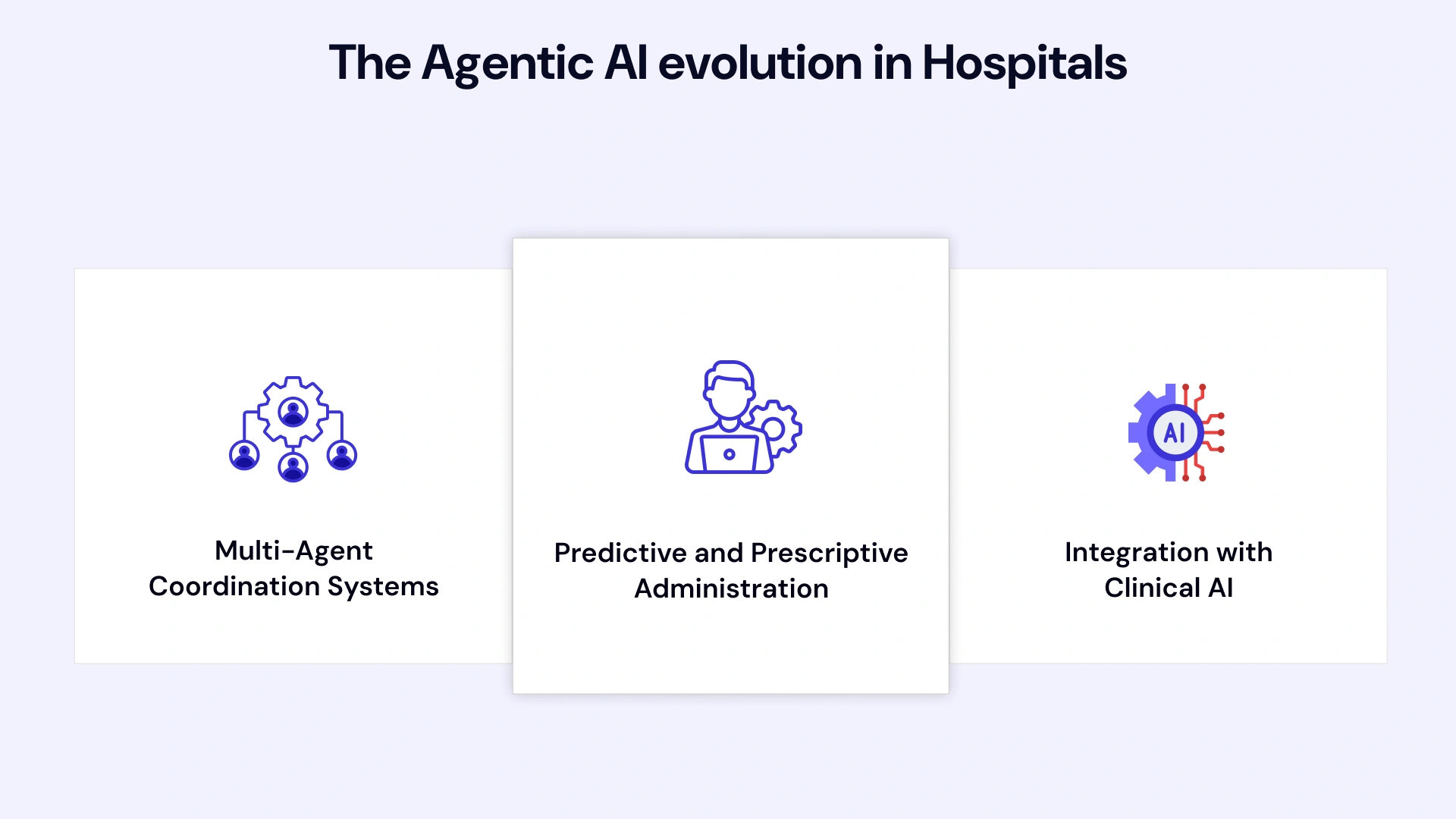
Multi-Agent Coordination Systems
Current agentic AI implementations typically focus on specific functional areas—scheduling, documentation, billing, or patient communication. The next evolution involves multi-agent systems in which specialized AI agents for healthcare in Canada coordinate autonomously to handle complex workflows spanning multiple domains.
For example, a patient presenting to an emergency department might trigger coordinated action by multiple autonomous AI agents: a triage agent assessing acuity and resource needs, a scheduling agent coordinating diagnostic testing, a documentation agent capturing clinical information, a billing agent initiating insurance verification, and a communication agent updating family members—all working together without human coordination.
Early implementations of multi-agent systems in Canadian healthcare organizations demonstrate 50-60% improvements over single-agent approaches for complex, cross-functional workflows, expanding the ROI of agentic AI in Canadian medical admin beyond current benchmarks.
Predictive and Prescriptive Administration
Today's agentic AI primarily focuses on autonomously executing current administrative tasks. Emerging capabilities enable predictive analytics that anticipate future needs and prescriptive recommendations that optimize organizational performance for healthcare operational efficiency AI Canada.
Predictive administrative AI can forecast patient volumes, staffing needs, and supply requirements, and address healthcare staffing shortages in Canada—enabling proactive adjustment rather than reactive management. Prescriptive capabilities go further, autonomously implementing optimal resource allocation, dynamic pricing for services with market flexibility, and strategic capacity planning based on long-term trends.
These advanced capabilities require sophisticated AI predictive maintenance services to ensure models remain accurate as healthcare delivery patterns evolve, especially in the post-pandemic environment, where utilization patterns continue shifting across the Canadian healthcare system.
Integration with Clinical AI
The most transformative future state involves seamless integration between administrative and clinical AI systems for comprehensive agentic AI in healthcare in Canada. Rather than operating in separate domains, these systems collaborate to optimize the entire patient journey from first contact through treatment completion.
For example, when a clinical AI system identifies a patient likely to benefit from a specific preventive screening, the administrative AI automatically schedules the appointment, handles insurance authorization through prior authorization automation in Canada, sends patient education materials, arranges transportation if needed, and ensures results are communicated and acted upon—creating a truly autonomous, patient-centered care experience.
Healthcare organizations making agentic AI investments today should select platforms and partners positioned to evolve toward this integrated future rather than point solutions that will become obsolete as AI capabilities advance—a critical consideration for implementing agentic AI in medical contexts.
Overcoming Implementation Challenges
While the healthcare AI business case in Canada is compelling, healthcare organizations face real implementation challenges. Understanding these obstacles and their mitigation strategies improves success rates and accelerates the realization of ROI for agentic AI Canada.
1. Data Integration Complexity
Healthcare organizations typically operate multiple disparate systems that don't communicate effectively with one another. Agentic AI requires comprehensive data access to operate autonomously, making integration the most common implementation bottleneck for autonomous agents for healthcare workflows in Canada.
Organizations should prioritize API-first architectures that enable secure, standards-based data exchange. Healthcare software development services with Canadian healthcare expertise can accelerate integration by leveraging pre-built connectors for common EHR and practice management platforms used in Canadian hospitals.
Some organizations pursue parallel strategies, implementing agentic AI in newer, more integrated clinical areas while gradually expanding to legacy system environments as integration capabilities mature—demonstrating the benefits of agentic AI for the medical industry through phased rollouts.
2. Staff Resistance and Trust Building
Healthcare staff who've spent careers developing expertise in manual healthcare processes may resist AI systems that automate their work in Canada. Building trust requires transparency about how agentic AI makes decisions, clear communication about organizational vision for human roles, involvement of front-line staff in implementation planning, and extensive training and support during transition periods.
Organizations that achieve the full 35% reduction in administrative burden in Canadian healthcare universally report that early staff involvement and transparent communication prove essential. Staff who understand how agentic AI enables them to focus on more meaningful work—particularly in addressing clinician burnout in Canada—become the strongest advocates for continued implementation.
3. Regulatory Uncertainty
Healthcare AI operates in an evolving regulatory environment where requirements for transparency, accountability, and human oversight continue to develop. This creates uncertainty for organizations making long-term technology investments in AI-driven healthcare operations in Canada.
Mitigating this risk requires selecting AI development services in Canada that actively participate in healthcare AI standards development, implementing robust governance frameworks that exceed current requirements to accommodate likely regulatory evolution, and maintaining detailed audit capabilities that demonstrate responsible AI deployment.
Health Canada and provincial healthcare regulators increasingly publish guidance on implementing healthcare AI. Organizations should establish regular regulatory monitoring processes to ensure compliance as requirements evolve and affect the Canadian healthcare system.

Drive Business Growth with VLink's Microsoft Business Solutions
As you navigate the transformative potential of agentic AI in healthcare in Canada and evaluate the ROI of agentic AI in Canadian hospitals, having the right implementation partner makes the difference between achieving the full 35% administrative reduction and falling short of expectations.
VLink's Microsoft Business Solutions bring deep expertise in healthcare technology transformation, combining agentic AI capabilities with robust integration with the Microsoft ecosystem to deliver measurable ROI for Canadian healthcare organizations. Our team understands the unique requirements of the Canadian healthcare system—from provincial regulatory variations to bilingual service requirements to complex privacy frameworks under PIPEDA and provincial health information acts.
Our dedicated team doesn't just implement technology; we deliver comprehensive transformation that addresses technical architecture, process optimization, change management, and ongoing support to ensure your agentic AI investment delivers sustained value. Our proven methodology has helped healthcare organizations across Canada achieve and exceed the 35% administrative reduction benchmark while improving patient experience and clinical outcomes through AI Canada's healthcare workflow automation.
Whether you're a hospital system exploring how Canadian hospitals reduce admin costs using AI, a CISO building the healthcare AI business case in Canada for AI investment, or a CDO designing the data architecture to enable autonomous agents for healthcare workflows in Canada, VLink provides the expertise, technology capabilities, and implementation support to turn ROI potential into realized results.
Our healthcare software development services integrate seamlessly with your existing healthcare technology investments while providing the flexibility to evolve as AI capabilities advance. We partner with you from initial assessment through implementation, optimization, and ongoing enhancement—ensuring your agentic AI capabilities grow alongside your organizational needs and continue delivering AI healthcare cost savings in Canada.
Conclusion
The 35% reduction in administrative burden isn't just a theoretical goal—it is a measurable roadmap to reclaiming billions for the Canadian healthcare system. For CISOs and CDOs, agentic AI is the strategic answer to chronic staffing shortages and ballooning wait times.
With the global market projected to leap from $5.25 billion to $199.05 billion by 2034, agentic AI has graduated from "emerging tech" to essential infrastructure. Organizations that move decisively now will secure a compounding advantage in efficiency and innovation; those that delay risk being left behind by more agile, AI-integrated competitors.
The technology is ready, and the ROI is clear. We are at a pivotal moment where the administrative constraints of the past can finally be dismantled. The question isn't whether AI will redefine Canadian healthcare administration, but which leaders will have the foresight to build the foundation for it today.
Ready to turn efficiency gains into reality? Our team specializes in healthcare-compliant AI development and strategic implementation within the Canadian regulatory landscape. Whether you are looking to pilot your first autonomous agent or scale a multi-agent ecosystem, we are here to help you lead the transformation. Reach out to our team today to schedule a consultation and see how we can help you achieve that 35% reduction.

Vice President, Strategy – VLink Inc.
Sambhavi Gopalakrishnan is the Vice President of Strategy at VLink Inc., bringing over a decade of experience in IT leadership, project implementation, and strategic growth. She possesses a strong foundation in technical project management and pre-sales, driving innovation and business transformation at VLink.

 Shivisha Patel