
The modern hiring landscape is a battleground where speed and personalization determine success. Recruiters spend an estimated 30 hours per week on manual, administrative tasks—a staggering drain on resources that often leads to candidate frustration and lost talent. Traditional processes, characterized by delayed responses and impersonal communication, simply cannot meet the demands of today’s digital-native job seeker.
At the epicenter of this transformation are recruitment chatbot solutions. These aren't just website widgets; they are sophisticated, conversational AI agents capable of handling up to 75% of candidate communications, functioning as a 24/7 extension of your talent team. They offer a mechanism for high-volume, high-quality engagement that is impossible to achieve with human staff alone.
For HR leaders who recognize that marginal efficiency gains are no longer sufficient, this guide serves as the definitive roadmap. We will delve deep into the strategic benefits, the core technology, the crucial ethical considerations, and a definitive implementation plan, equipping you with the knowledge to select and deploy AI hiring chatbot solutions that will redefine your competitive edge.
Why HR Leaders Are Adopting Recruitment Chatbot Solutions
The decision to implement a recruitment chatbot is fundamentally a commercial one, driven by the need for measurable improvements in the core metrics of talent acquisition: time, cost, quality, and experience. For executives, these solutions represent a rapid pathway to optimizing the entire hiring P&L.
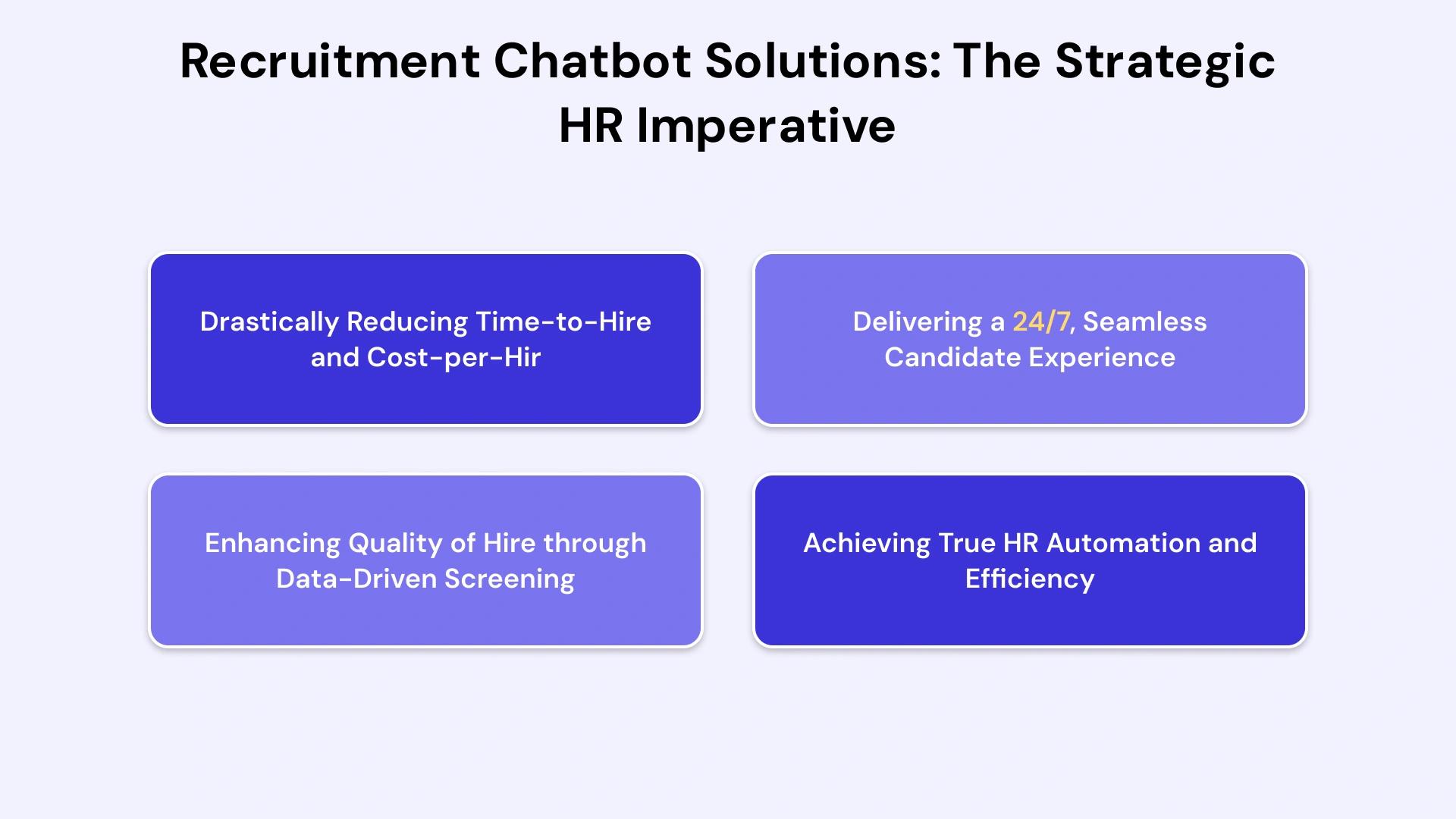
Drastically Reducing Time-to-Hire and Cost-per-Hire
In competitive markets like the US, Canada, and India, every day a key role remains unfilled translates directly into lost revenue. Recruitment chatbots tackle this bottleneck head-on.
- Accelerated Screening: AI-powered chatbots can screen thousands of candidates in the time it takes a human recruiter to review just a handful. Studies show that AI can reduce the overall time-to-hire by up to 50%.
- Administrative Relief: By automating tasks such as FAQ responses, scheduling, and application status updates, recruiters are regaining significant bandwidth—often 5 to 10 hours per week. This allows them to focus on high-value interactions, candidate relationship building, and strategic sourcing.
- Cost Efficiency: Automating initial interactions leads to quantifiable savings. Organizations have reported that adopting these tools can reduce overall hiring costs by as much as 30% per hire by lowering administrative overhead and improving recruiter productivity.
Delivering a 24/7, Seamless Candidate Experience
The modern candidate expects instant gratification and transparent communication. A slow, opaque hiring process is now a primary reason candidates drop out or decline offers, especially for highly sought-after technical roles.
- Always-On Engagement: Conversational AI provides true 24/7 availability, especially crucial for global companies or those recruiting across multiple time zones (like the US/India corridors). A candidate applying at 2:00 AM can receive immediate, accurate answers to their questions (Chatbots for job application FAQs).
- Personalized Interaction: Advanced AI recruitment chatbots leverage candidate data (location, desired role, past interactions) to tailor conversations, making the experience feel supportive and personalized, rather than robotic. This results in better engagement. Data suggests that 75% of candidates report a better experience when interacting with AI chatbots.
- Reducing Candidate Ghosting: Proactive, automated check-ins and Chatbots for application status updates ensure candidates feel valued and informed, significantly mitigating the risk of them "ghosting" the hiring team.
Enhancing Quality of Hire through Data-Driven Screening
The most transformative benefit of recruitment chatbot solutions is their ability to improve candidate quality by focusing on objective data rather than subjective human intuition.
- Objective Pre-Screening: The chatbot acts as a consistent, objective initial filter. Using predefined, validated criteria—including skills, experience, and cultural fit indicators—the bot applies scoring models that eliminate the subjective biases inherent in human review. This is the first step toward effective AI for resume screening.
- Predictive Matching: The most sophisticated platforms use machine learning to analyze communication patterns and responses gathered during chatbot interactions, comparing them with those of successful hires. This predictive capability is powerful: candidates selected by AI are 14% more likely to pass the subsequent human interview and 18% more likely to accept a job offer.
- Structured Data Collection: Unlike a quick human phone screening, a chatbot systematically gathers structured, measurable data, ensuring every candidate is evaluated on the same terms.
Achieving True HR Automation and Efficiency
The goal of implementing HR automation tools is to enable the HR function to transition from an operational cost center to a strategic business partner.
By deploying robust recruitment chatbot solutions, organizations move closer to fully automated workflows.
The chatbot acts as the "front office" for talent acquisition, triaging inquiries, qualifying leads, and scheduling interviews, allowing human recruiters to step into the role of strategic advisor and closer. They spend their time on complex negotiations, deep evaluation of shortlisted candidates, and the development of market-specific sourcing strategies.
For organizations looking to build out their capabilities, exploring specialized AI development services is often the fastest path to deployment, ensuring the solution is perfectly tailored to complex, proprietary talent pipelines and business rules.
Deconstructing the Technology: How AI Recruitment Chatbots Work
Understanding the technological underpinnings of AI recruitment chatbots is crucial for HR leaders making significant investment decisions. Not all "bots" are created equal; the effectiveness lies in their intelligence layers.
The Core Engine: NLP, NLU, and Machine Learning
Modern recruitment chatbots are not built on simple scripts; they are powered by advanced Natural Language Processing (NLP) and Natural Language Understanding (NLU).
- Natural Language Processing (NLP): The ability of a chatbot to understand human language, whether typed or spoken. It breaks down the text to identify keywords, entities (like "software engineer" or "New York"), and intentions.
- Natural Language Understanding (NLU): This is the deeper intelligence layer. NLU allows the bot to understand the meaning and context of the candidate's request, even if the phrasing is complex, slang is used, or there are spelling errors. For instance, NLU allows the bot to know that "when do I hear back?" relates to the "application status update" intent.
- Machine Learning (ML): ML algorithms are what make the chatbot get smarter over time. Every interaction, every successful hire, and every failed conversation feeds the ML model, refining the bot's responses, improving its candidate-job matching accuracy, and teaching it to handle increasingly nuanced queries.
Rule-Based vs. Conversational AI Models
The effectiveness of a solution depends heavily on the model used:
| Feature | Rule-Based Chatbot | Conversational AI Chatbot |
| Technology | If/Then logic, predefined scripts. | NLP, NLU, Deep Learning, Generative AI. |
| Capability | Answers basic, concrete FAQs (e.g., "What is the office address?"). | Handles complex, multi-turn conversations, context switching, and open-ended queries. |
| Candidate Experience | Often feels robotic, easily breaks if a question deviates from the script. | Human-like, remembers context, can proactively offer information, and handles emotional nuance. |
| Best For | Simple career site FAQs, known questions. | Full-funnel engagement, high-volume screening, personalized candidate interaction. |
For enterprise-level talent acquisition, investing in Conversational AI is the only viable path to deliver the strategic benefits of reduced workload and improved candidate experience.
Seamless Integration with the Existing HR Stack
A chatbot is useless if it exists in a silo. True recruitment chatbot solutions must act as an orchestration layer, tying together disparate HR systems:
- ATS Integration: The bot must seamlessly sync candidate data directly into the Applicant Tracking System (ATS), creating new records, updating application statuses, and tagging candidates with pre-screening results. This single source of truth ensures consistency and compliance.
- Calendar Systems: One of the most potent and immediate ROI generators is automated interview scheduling. By integrating directly with Outlook or Google Calendar, the chatbot eliminates the notorious email back-and-forth, cutting scheduling time by up to 90% and ensuring candidates are booked instantly based on recruiter availability.
- Assessment Tools: Chatbots can be configured to automatically trigger and manage candidate assessments based on pre-screening results, streamlining the evaluation pipeline.
Key Use Cases for Recruitment Chatbot Solutions Across the Funnel
A strategic recruitment chatbot solution is designed to provide value at every stage of the talent acquisition process, from first impression to final offer.
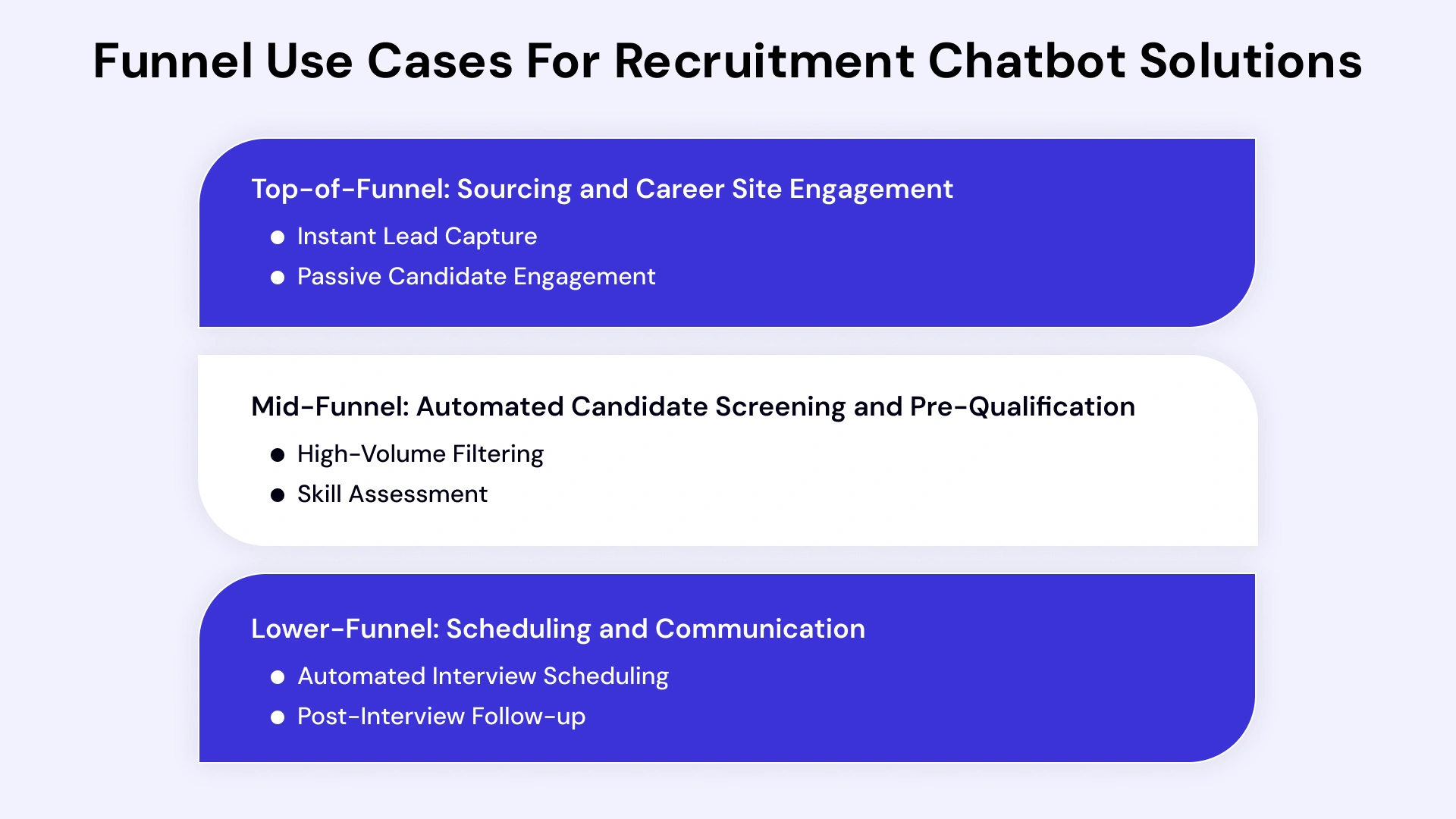
Top-of-Funnel: Sourcing and Career Site Engagement
The chatbot is the front door to your employer brand, significantly improving lead conversion.
- Instant Lead Capture: On the career site, the bot acts as a virtual concierge, immediately engaging visitors, suggesting jobs based on their input, and facilitating instant applications. This proactive engagement is why career sites using chatbots often generate 95% more leads.
- Passive Candidate Engagement: Chatbots can be deployed via social media or SMS to engage passive candidates in a low-friction, conversational way, moving them from initial interest to a qualified lead without requiring a human interaction.
Mid-Funnel: Automated Candidate Screening and Pre-Qualification
This is where chatbots deliver massive efficiency gains, reducing the volume of unqualified candidates that reach the human recruiter’s desk.
- High-Volume Filtering: In environments like mass hiring or university recruitment, the chatbot is invaluable. It can deploy standardized pre-screening chatbot questions to determine essential qualifications, salary expectations, work authorization, and cultural fit. Data shows that up to 40% of applications are filtered by AI before a human reviewer even sees them.
- Skill Assessment: Conversational AI can dynamically adjust its question set based on a candidate's previous answers, effectively conducting a deep dive into specific skills. For instance, if a candidate claims expertise in Python, the bot can immediately present a brief, role-specific challenge or technical question.
To further optimize this part of the process, pairing a recruitment chatbot solution with a robust recruitment automation tool creates a hyper-efficient system in which the chatbot feeds qualified candidates directly into automated nurture campaigns.
Lower-Funnel: Scheduling and Communication
The most fragile part of the funnel—where qualified candidates often drop out due to poor communication—is managed effortlessly by AI.
- Automated Interview Scheduling: The bot handles the complex logistics of coordinating multiple interviewers across different time zones and with the candidate, presenting pre-approved slots and instantly confirming the booking (Automated interview scheduling ch).
- Post-Interview Follow-ups: Following up, sending prep materials, or collecting feedback are tedious tasks that the bot can handle. This continuous, immediate communication ensures candidates remain engaged and excited about the opportunity. As much as 75% of candidate communications can be automated this way, allowing recruiters to focus solely on the high-touch, relationship-intensive communications.
Addressing the Concern: Ethical AI, Bias Reduction, and Transparency
For HR leaders, moving past the excitement of automation requires a serious commitment to the ethical and compliance challenges posed by AI. Recruitment chatbot solutions must be deployed responsibly to maintain trust and mitigate legal risk.
Mitigating Bias in the Hiring Process
One of the most compelling arguments for AI for diversity hiring is its potential to neutralize unconscious human bias.
- Consistency and Objectivity: Unlike a human screener, a chatbot is trained to evaluate candidates based only on the defined, job-specific criteria. It doesn't get distracted by names, education prestige, or gender. When properly implemented and audited, AI-powered platforms can reduce hiring bias by up to 60%.
- The Data Challenge: The risk is not the AI itself, but the data it is trained on. If a historical dataset reflects past biases (e.g., predominantly hiring men for engineering roles), the AI will replicate those biases. This necessitates meticulous data auditing and training the AI using datasets intentionally focused on diverse, successful employee profiles.
The Human Handoff and Hybrid Model
The most successful recruitment chatbot solutions operate not as replacements, but as powerful co-pilots for human recruiters.
- Hybrid Success: The optimal model is the hybrid approach. The bot handles repetitive administrative and qualification tasks and seamlessly hands off the conversation to a human recruiter for the strategic, empathetic, and complex decision-making phases. This blend maintains efficiency while preserving the critical human element of relationship building.
- Human Oversight: Crucially, human recruiters must maintain oversight, monitor chatbot performance, step in for complex queries, and ensure the final hiring decision always rests with a person.
Ensuring Compliance: NYC Law 144 and Global Standards
Regulatory bodies globally are now legislating the use of automated employment decision tools (AEDTs), making compliance a non-negotiable factor in tool selection.
- Transparency Requirements: Laws like NYC’s Local Law 144 require employers to notify candidates when AI is used in the hiring process, aligning with the 79% of candidates who want to be informed when AI is used. Transparency builds trust and manages candidate expectations.
- Bias Audits: Enterprise: Grade recruitment chatbot solutions must provide the capability for annual, independent bias audits to prove that the systems do not result in disparate impact based on protected characteristics. Failure to comply can result in significant fines and brand damage.
Implementing Your Recruitment Chatbot Solution: A Strategic Roadmap
Deploying a conversational AI tool is a high-stakes project. A structured, strategic roadmap is required to ensure successful adoption, integration, and ROI maximization.
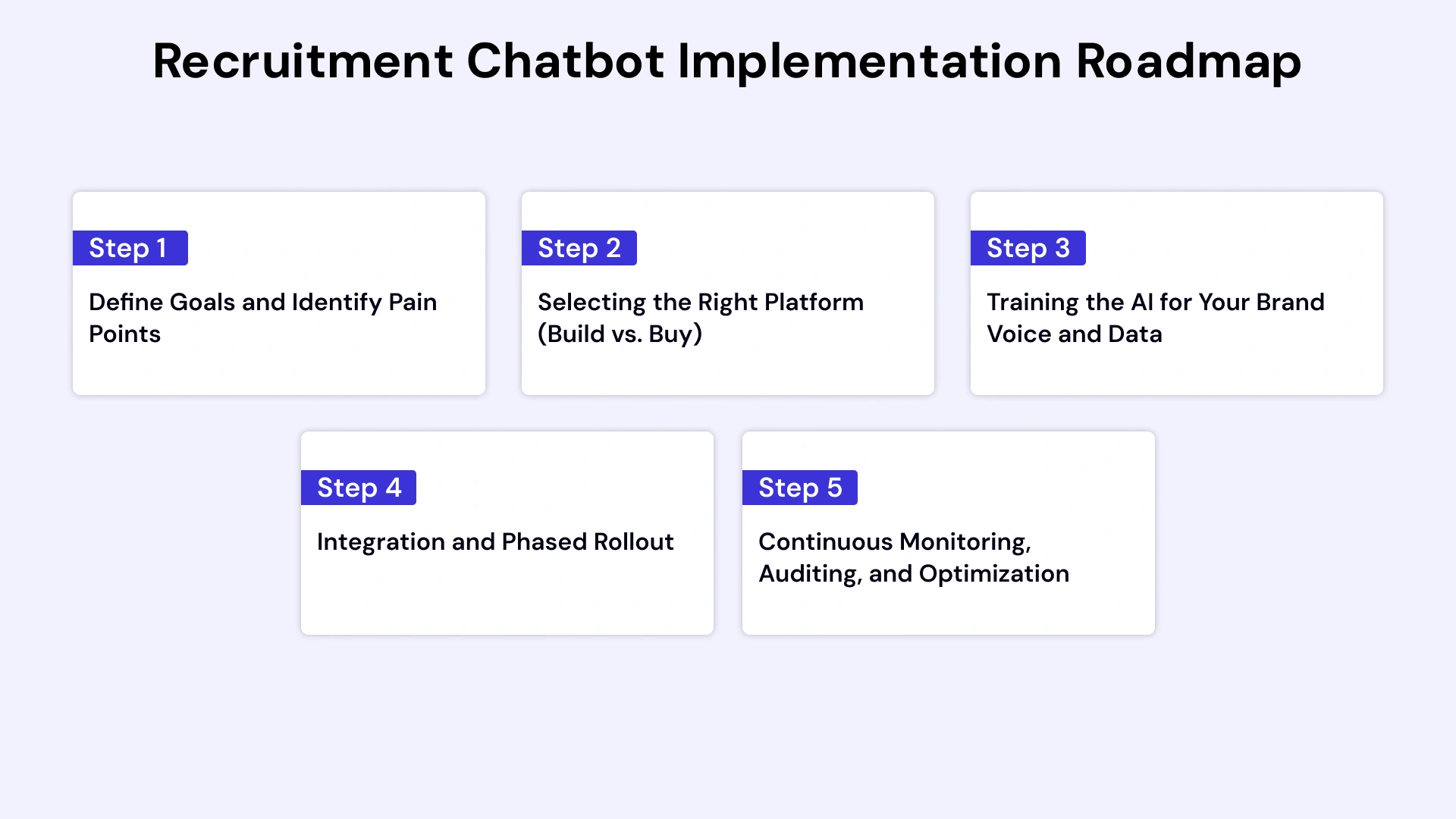
Step 1: Define Goals and Identify Pain Points
Before selecting a vendor, HR leaders must align on the why.
- Analyze Metrics: Which KPI is the most critical bottleneck? Is it low candidate experience scores, a high cost-per-hire, or excessively long time-to-fill for volume roles?
- Prioritize Use Cases: Define the initial scope. Start small—perhaps automating only the FAQ section or only the interview scheduling for one department—to build quick wins and internal support.
Step 2: Selecting the Right Platform (Build vs. Buy)
The choice between a proprietary build and a commercial solution (buy) dictates resources and timeline.
- "Buy" (SaaS): Faster deployment, lower upfront cost, instant access to pre-trained recruitment models. Ideal for organizations seeking rapid automation.
- "Build" (Custom): Necessary for organizations with highly proprietary ATS systems, extremely specialized candidate pools, or complex compliance requirements.
If your in-house HR tech team is stretched thin, using an IT staff augmentation service can provide the specialized AI developers needed to integrate or customize a solution without the long-term commitment of new full-time employees.
Alternatively, for large-scale, proprietary system development that requires dedicated focus and complete control, engaging dedicated software teams offers a flexible, committed delivery model that ensures the solution is built to your exact specifications.
Step 3: Training the AI for Your Brand Voice and Data
The generic AI model must be customized to your organizational DNA.
- Data Injection: Feed the bot with your specific job descriptions, policies, compensation bands, and cultural vocabulary. The quality of this training data is the single most significant determinant of the bot's success.
- Tone and Persona: Define the chatbot's persona. It must speak in your brand's voice—professional, energetic, empathetic—to ensure consistency with your employer brand
Step 4: Integration and Phased Rollout
Integrate the chatbot deeply into your existing workflow before a full launch.
- Pilot Program: Run a pilot for a low-risk, high-volume job family. Monitor the accuracy rate and candidate satisfaction metrics obsessively.
- Go-Live Strategy: Once the pilot is successful, roll out the functionality in phases—for example, add screening questions after a month of successful FAQ handling.
Step 5: Continuous Monitoring, Auditing, and Optimization
The deployment is just the beginning. The competitive advantage comes from continuous improvement.
- Track Conversion Metrics: Monitor key metrics like chat-to-application conversion rates, interview show-up rates, and time saved per recruiter.
- Audit Conversations: Periodically review logs of human-to-bot interactions, specifically focusing on "fall-off" points where the bot failed to answer a question. Use these failures as new training data to teach the bot and improve its NLU.
The Future of AI in the Hiring Process: Trends Beyond 2025
The current generation of recruitment chatbot solutions is already powerful, but the future of AI in the hiring process points toward even deeper levels of intelligence and engagement. HR leaders must select platforms that are equipped to evolve with these anticipated trends:
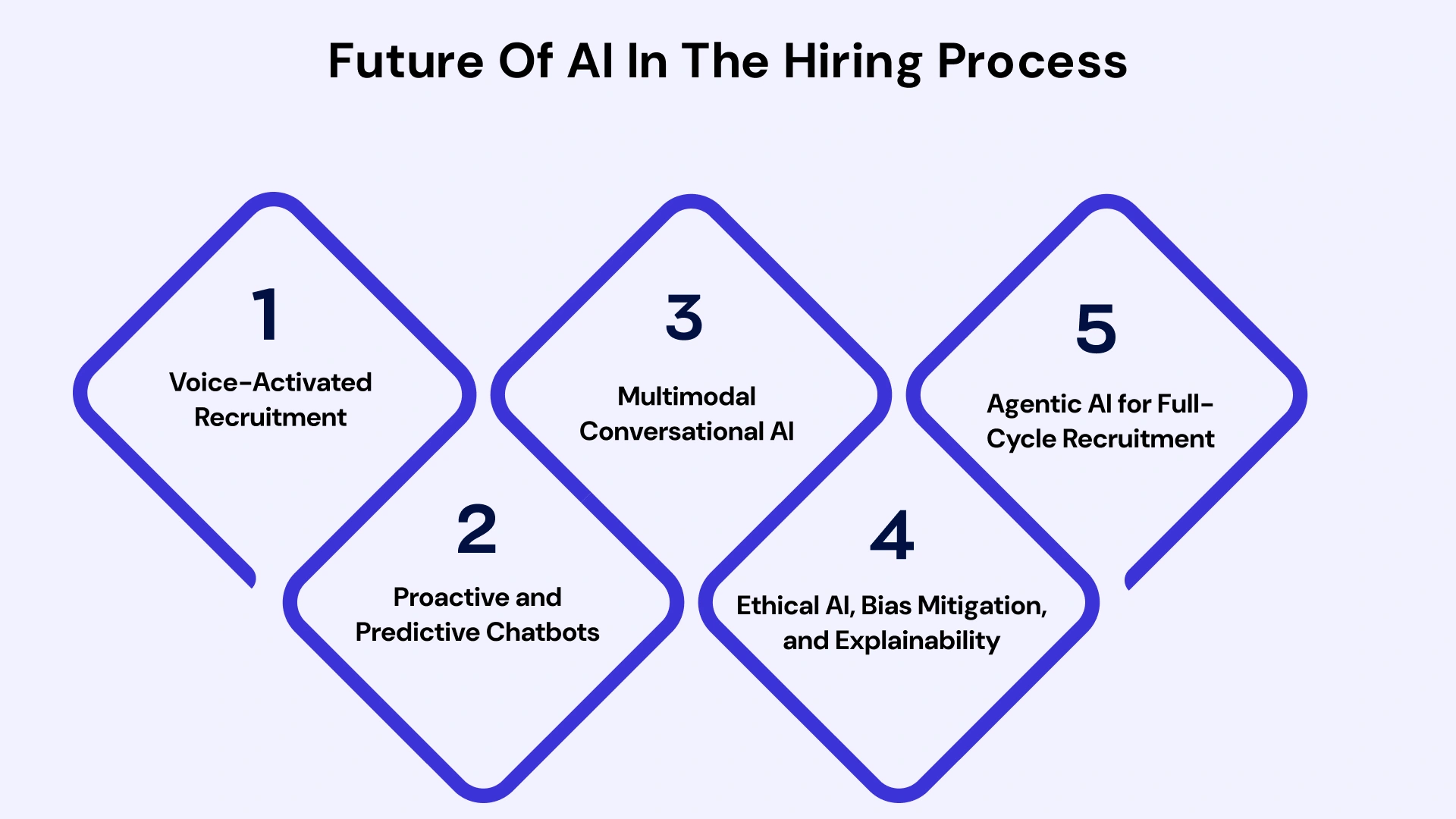
- Voice-Activated Recruitment: As voice-first interfaces become ubiquitous (Alexa, Siri, Google Assistant), chatbots will increasingly handle voice interactions. Candidates will be able to apply for jobs or check statuses simply by speaking to a virtual assistant, enabling accurate hands-free application and inquiry management.
- Proactive and Predictive Chatbots: Future AI will move beyond reacting to candidate queries. By analyzing real-time labor market data and internal performance metrics, chatbots will proactively engage candidates with job opportunities before they even start looking. They will use predictive analytics to forecast a candidate’s likelihood of success in a role, significantly impacting long-term retention metrics.
- Multimodal Conversational AI: The next evolution will see seamless integration of text, voice, and video. Chatbots will initiate the conversation via text, handle scheduling, and then transition to AI-analyzed video interviews. This multimodal approach enables a richer, more comprehensive assessment of a candidate's communication style and soft skills.
- Ethical AI, Bias Mitigation, and Explainability: As AI increasingly takes over decision-making, regulatory pressure (such as the EU AI Act) will mandate transparency. Future chatbot solutions must be built with embedded bias-detection and mitigation tools. Furthermore, they will provide recruiters with explainable AI reports detailing why a candidate was ranked highly, ensuring compliance and building candidate trust.
- Agentic AI for Full-Cycle Recruitment: Moving beyond simple automation, Agentic AI systems will emerge. These are autonomous AI agents capable of completing multi-step, complex workflows without continuous human prompting. An AI agent could autonomously source talent, customize outreach, screen, schedule, and refine the entire process, effectively functioning as a "digital recruiter" for high-volume or entry-level roles.
Setting Up Your Chatbot for Success with VLink Expertise
Implementing a sophisticated AI hiring chatbot solution is a significant investment that requires specialized technical and strategic expertise. As a leading partner in HR tech transformations, VLink offers the focused guidance necessary to move from platform selection to full-scale, compliant deployment.
Our dedicated software development teams bring deep expertise across the entire project lifecycle, ensuring your custom recruitment chatbot solutions are meticulously designed, built, and optimized to deliver maximum return on investment (ROI):
- Strategic Blueprinting: We work with your HR and IT leadership to map your unique talent acquisition process against the bot's capabilities, defining the precise scope for automation (e.g., initial FAQs, technical screening, or complete Automated interview scheduling).
- Deep System Integration: Leveraging our extensive experience with top-tier ATS (e.g., Workday, SuccessFactors, Taleo) and HRIS platforms, we ensure your chatbot integrates flawlessly, maintaining data integrity and compliance across all systems.
- Custom Persona and Training: We go beyond a generic setup, helping you define the chatbot's voice, ensuring it aligns perfectly with your employer brand. We train the NLU models on your specific job descriptions and company policies, guaranteeing high accuracy from day one.
- Ethical AI Auditing: We embed compliance and fairness into the deployment process, providing the bias-auditing frameworks and documentation required for modern regulatory environments, ensuring your use of responsible AI in HR is sound.
For organizations looking to execute this transition rapidly and flawlessly, engaging our services provides the specialized AI development services and technical bandwidth required without straining internal resources.
Pro Tips: For businesses ready to take the next step, AI lead qualification for SaaS teams is worth exploring to strengthen delivery outcomes and long-term performance.
Conclusion: Securing Your Talent Edge with Conversational AI
The market demands that HR leaders become custodians of both efficiency and experience. Relying on manual processes in a hyper-competitive talent market is a recipe for falling behind.
Enterprise-grade recruitment chatbot solutions offer the definitive strategic leverage required to win the war for talent. They deliver instant, personalized engagement to your candidates while simultaneously freeing your human recruiters to focus on strategic relationship management. By reducing cost, cutting time-to-hire, and mitigating bias through data-driven screening, conversational AI is not just a tool—it is the modern engine of talent acquisition.
The time to move from evaluation to aggressive, ethical implementation is now. To explore how VLink can tailor a state-of-the-art recruitment chatbot solution to your unique business needs and integrate it seamlessly with your existing HR stack, please contact us today.

Vice President, Strategy – VLink Inc.
Sambhavi Gopalakrishnan is the Vice President of Strategy at VLink Inc., bringing over a decade of experience in IT leadership, project implementation, and strategic growth. She possesses a strong foundation in technical project management and pre-sales, driving innovation and business transformation at VLink.

 Shivisha Patel