





Disparate Patient Data
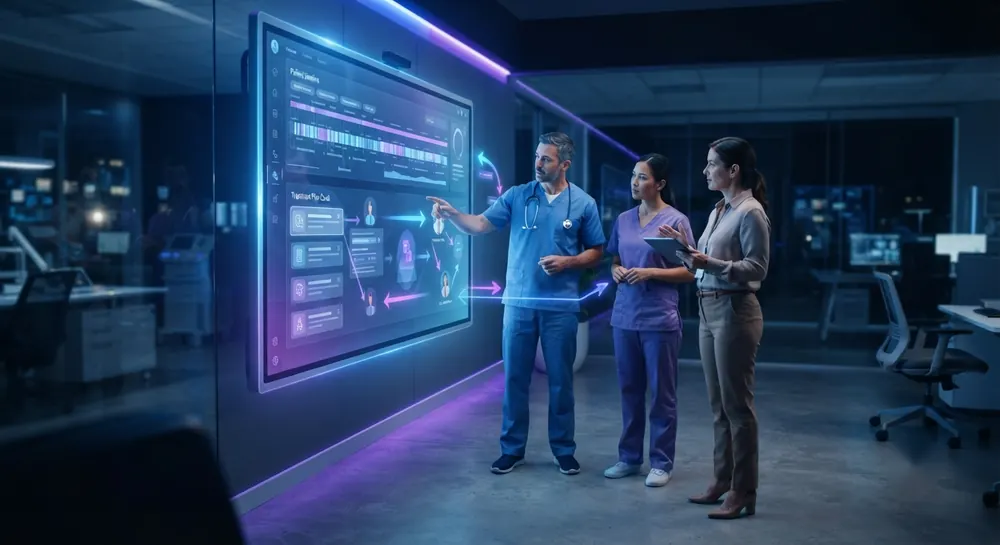
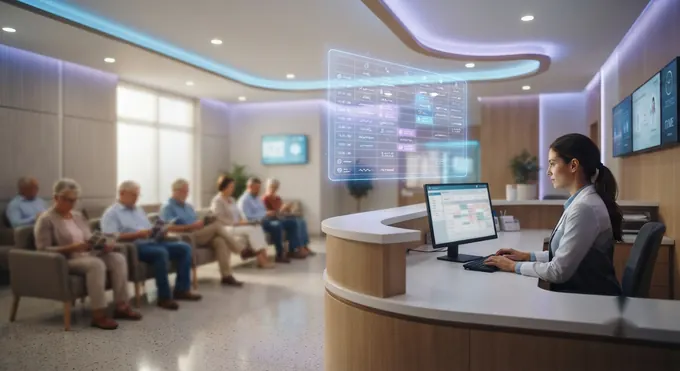
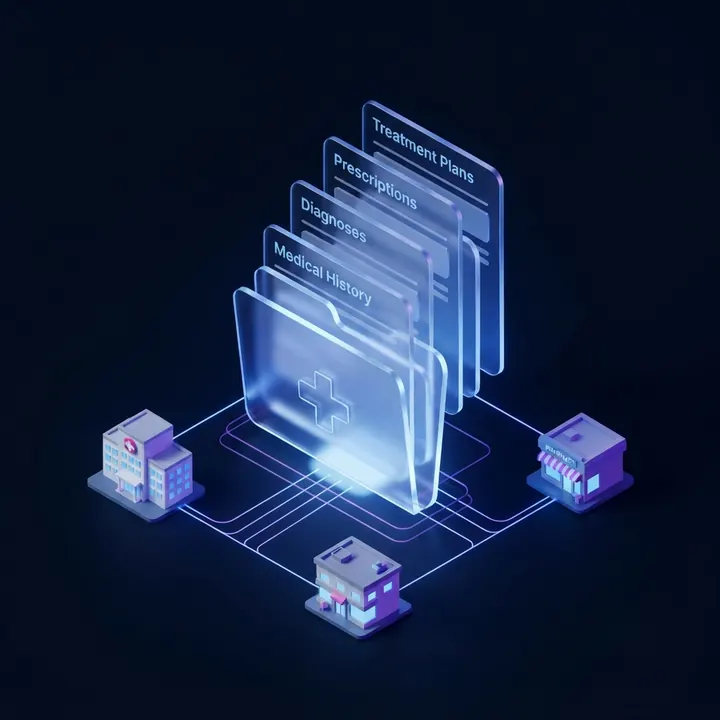
Patient records, test results, and treatment histories are often spread across separate applications and departments, making it difficult to maintain a single view of patient care.
Simplify healthcare operations with secure, scalable EHR/EMR solutions.
VLink builds custom healthcare software that connects patient data, streamlines clinical workflows, and supports better care delivery.


Off-the-shelf EHR systems may not fit every clinical workflow or organization structure. Rigid templates, complex interfaces, and limited integration can slow down healthcare operations and create data silos across departments.
VLink builds custom EHR and EMR software designed around your clinical workflows, operational requirements, and interoperability needs. From patient record management to departmental integrations, our healthcare software development services help healthcare organizations improve efficiency, connectivity, and data accessibility.

Many healthcare providers face challenges with existing EHR/EMR systems:
Patient records, test results, and treatment histories are often spread across separate applications and departments, making it difficult to maintain a single view of patient care.
Generic EHR templates and multi-step documentation processes can create extra administrative burden for clinicians and staff.
Healthcare applications often struggle to exchange data with external laboratories, pharmacies, imaging systems, or third-party platforms.
Older medical software may lack modern security controls, performance capabilities, cloud infrastructure, or mobile access.
Healthcare applications must protect sensitive patient data through access controls, encryption, and auditability.
Healthcare organizations growing in patient volume, staff size, or service offerings may find their software difficult to scale.
VLink provides end-to-end healthcare software engineering, from discovery and UI/UX design to development, integration, and ongoing support:
We design and develop custom EHR systems tailored to the operational workflows of hospitals, health systems, and healthcare networks.

We build practice-focused EMR applications designed around clinical workflows for specialty practices, clinics, and outpatient facilities.

We connect your EHR/EMR platforms with internal systems, third-party software, and external healthcare networks.

We help healthcare organizations migrate patient data from legacy applications to modern, scalable platforms while maintaining data structure and integrity.

We develop secure telehealth solutions and patient portals that allow patients to schedule appointments, view medical information, and communicate with healthcare providers.

We provide post-deployment support, performance monitoring, updates, and feature enhancements to keep your healthcare software reliable and secure.

Our custom healthcare software incorporates essential functionality to support clinical, administrative, and patient-facing operations.
Maintain patient profiles, demographics, and medical histories.
Document diagnoses, treatment plans, notes, and clinical observations.
Manage appointments, availability, and provider calendars.
Support digital prescription workflows and pharmacy connectivity.
Connect with diagnostic tools and review lab results in one platform.
Connect with billing, invoicing, and practice management tools.
Give patients access to appointment requests, records, and communication.
Assign permissions based on clinician, staff, and administrative roles.
Track clinical trends, operational metrics, and system usage.
Maintain activity logs for user actions and system changes.
Off-the-shelf software may not fit every clinical workflow. We build custom EHR and EMR applications around your operational requirements.

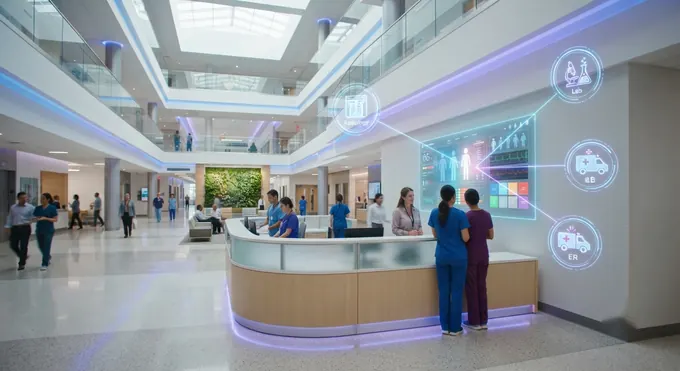
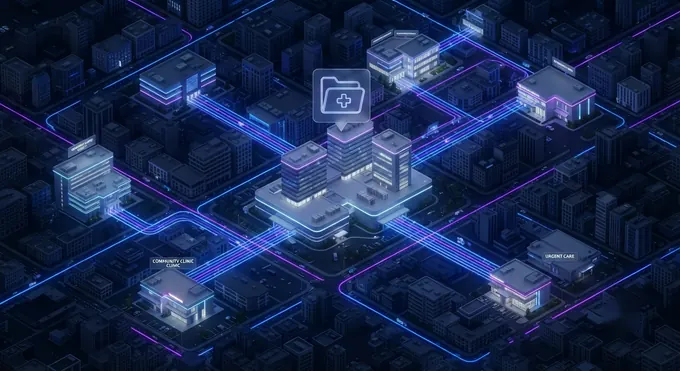
Enable secure data exchange across your healthcare ecosystem with VLink's EHR interoperability solutions. We integrate healthcare applications to improve connectivity, data access, and clinical workflows.
Exchange clinical and administrative data between systems.
Enable standardized data exchange through FHIR APIs.
Connect diagnostic and laboratory systems.
Enable prescription and medication data exchange.
Connect billing and revenue cycle systems.
Integrate with Epic, Oracle Health (Cerner), and athenahealth, subject to available interfaces and vendor access.
Protect sensitive patient information with security-focused EHR/EMR development. VLink incorporates security controls throughout the software development lifecycle.
Protect data at rest and in transit.
Control access based on user roles.
Secure user identities and system access.
Track data access and system activities.
Support data recovery and business continuity.
Protect healthcare integrations and data exchange.
We select technologies based on your existing infrastructure, interoperability needs, security requirements, and expected system scale.
We integrate AI capabilities where they provide measurable value to clinical and operational workflows. Our AI integration services help organizations explore practical AI applications while considering data privacy, accuracy, human oversight, and regulatory requirements.
Support clinical note drafting and summarization for clinician review.
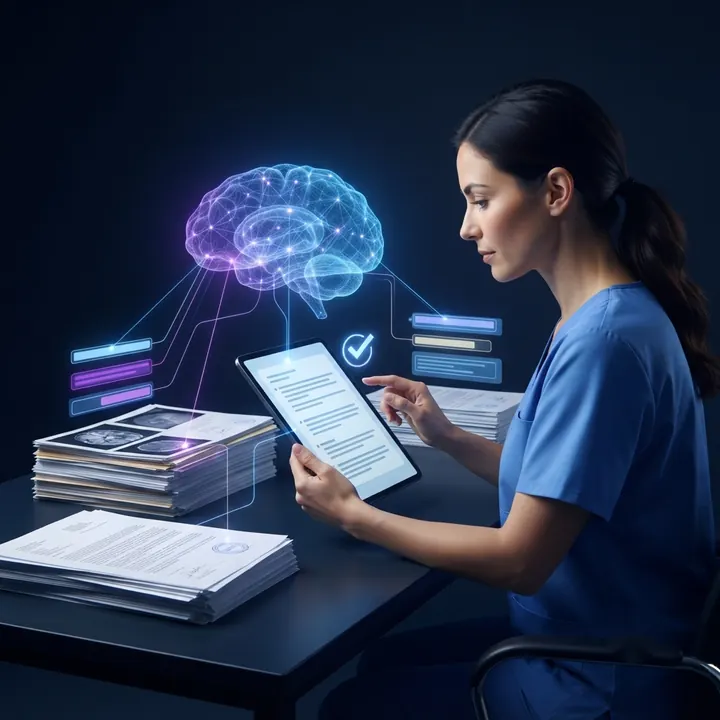
Extract information from medical records and documents.
Identify patterns and support risk assessment.
Automate routine administrative and clinical tasks.
Surface relevant information to assist healthcare professionals in clinical workflows.

Healthcare operations and clinical workflows vary by organization. We develop solutions based on the needs of different healthcare providers and business models.

Centralized patient records, clinical workflows, and departmental integrations.
Explore Healthcare
Patient management, clinical documentation, and appointment workflows.

Specialty-specific patient records, treatment plans, and documentation.

Data exchange and coordinated patient information across facilities.

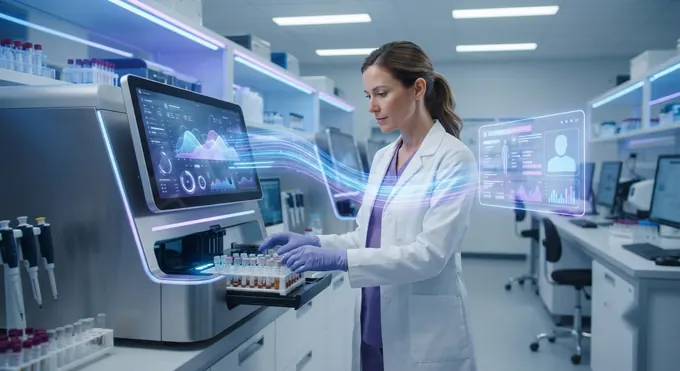
Laboratory integration, test results, and reporting workflows.

Patient records, virtual consultations, and digital care coordination.

Custom healthcare platforms, APIs, and scalable product development.
Healthcare software requires careful planning because it directly supports clinical and operational workflows.
We understand your clinical workflows, user requirements, existing systems, integration needs, and business objectives.
We define the software architecture, technology stack, data structure, security approach, and integration strategy.
We design intuitive interfaces for clinicians, administrators, and patients, focusing on usability and efficient workflows.
Our engineers develop the required modules and connect your platform with existing healthcare systems and third-party applications.
We conduct functional, integration, security, and performance testing to validate system behavior and reliability.
We support deployment, system monitoring, maintenance, and future enhancements based on your evolving requirements.
Choosing the right EHR software development company matters. VLink combines software engineering, healthcare technology, and integration expertise to build solutions around your needs.
Experience connecting applications, APIs, and enterprise systems.
Security considerations integrated throughout the development lifecycle.
Solutions designed to accommodate evolving requirements and growing workloads.
Access to dedicated developers or complete development teams.
Continued maintenance, optimization, and feature development after deployment.
Let’s discuss your EHR/EMR software development requirements and identify the right technology approach for your organization.

Every healthcare software project has different technical requirements, timelines, and resource needs. We offer flexible engagement models to help you build the right team for your project.
You can also hire software developers with relevant engineering skills to extend your existing healthcare technology team.
The cost depends on system complexity, features, integrations, security requirements, user roles, and deployment infrastructure. A basic solution may require a smaller investment, while an enterprise EHR platform with multiple integrations and advanced workflows requires a larger budget. A detailed discovery process helps establish an accurate estimate.
Development timelines depend on the project scope and technical requirements. A basic EHR solution may take 3–6 months, while a complex enterprise platform can take 9–18 months or longer. Integrations, data migration, testing, and compliance requirements also influence delivery timelines.
EMR software focuses primarily on digital patient records within a single practice or healthcare organization. EHR software supports a broader view of patient health information and is designed to facilitate information exchange across authorized healthcare providers and systems.
We incorporate security measures such as encryption, role-based access, authentication, audit logging, and secure data exchange. We also consider applicable HIPAA requirements during architecture and development. However, overall compliance depends on organizational policies, implementation, operations, and other applicable safeguards.
HL7 and FHIR provide standards for exchanging healthcare information between systems. HL7 messaging supports the exchange of clinical and administrative data, while FHIR uses standardized resources and APIs to enable modern healthcare data interoperability.
Yes. Custom EHR platforms can integrate with systems such as Epic, Oracle Health (formerly Cerner), and athenahealth using available APIs, vendor-supported interfaces, and relevant interoperability standards. Integration feasibility depends on vendor permissions, access, and technical requirements.
Off-the-shelf software can be suitable when your requirements align with existing features and workflows. Custom EHR development is worth considering when you need specialized functionality, deeper integrations, greater control over workflows, or a platform tailored to your business model. The right choice depends on your budget, requirements, and long-term strategy.
Yes. We can help modernize legacy EHR/EMR platforms and plan data migration to newer systems. The process includes data assessment, mapping, transformation, validation, and migration testing to maintain data integrity and minimize operational disruption.